Remove All Timelines and Tracking
If Miguel got CFS again tomorrow, the very first thing he'd do is throw out every timeline, every target, and every tracking system related to recovery.
This sounds counterintuitive, especially if you're a goal-oriented person. Miguel was the same way. Before CFS, he set targets for everything: school grades, client numbers as a personal trainer, workout goals, career milestones. Being data-driven and goal-focused worked in every area of his life.
But recovery doesn't follow those rules. Setting a deadline like "I'll be doing 100 push-ups by December" puts pressure on the nervous system. It creates an expectation. And when you're in an adjustment period that makes the deadline impossible, that unmet expectation creates stress. Stress fills up your threshold. And a fuller threshold means more symptoms, slower recovery, and less capacity for the things that actually matter.
The total amount of physical, mental, and emotional stress your nervous system can handle at any given time. When this threshold is maxed out, symptoms appear. Timelines, tracking, and pressure from expectations all take up space in this threshold, leaving less room for actual recovery activities.
Tracking symptoms does the same thing. Monitoring how many steps you took, rating your energy on a scale, logging your symptom intensity: it keeps your focus locked on the illness. Every time you check in with your symptoms, you're training your brain to pay attention to them. And research suggests that what you focus on tends to amplify.[1] If you want to understand what CFS actually is and why conventional tracking often works against people, the science behind it matters.
In our experience, the strategies that work in every other area of life often don't apply to recovery. They can do the exact opposite. For many people, the more you track and the more you set timelines, the slower recovery tends to go.
Prioritize Recovery Over Everything
The second thing Miguel would do is reprioritize everything in his life around recovery. That means clearing the calendar, saying no to most commitments, and putting the recovery principles ahead of other people's requests.
Practically, this looks like: if you told friends you'd hang out on Saturday but you're flaring up on Friday night, you cancel. If you've got meetings stacked throughout the week but you need a rest day, you move the meetings. If someone gets frustrated that you keep canceling, that's their problem, not yours.
Recovery can be unpredictable. You don't know if an adjustment period will last a few days or a few weeks. If your calendar is packed, every flare-up creates a cascade of stress: cancellations to make, apologies to send, guilt about letting people down. All of that fills up the stress threshold.
Miguel would say no to 90 to 95% of opportunities. Networking events, podcasts, social invitations. Not because they're bad, but because they take up threshold space that recovery needs. An open calendar gives the nervous system room to breathe. And when you're feeling better on a given day, you can add something in. It's much easier to add things than to cancel them.
The core practice here is responding well to symptoms and following the recovery principles every day. That takes priority over everything else. If it's a day where you need to pull back, you pull back. No guilt. No negotiation.
Find Activities You Enjoy at Every Level
This is the piece that makes recovery sustainable and prevents you from feeling like you're missing out. The idea is simple: create a short list of activities you genuinely enjoy that match different energy levels.
On better days, when capacity is higher, Miguel liked filming videos, going outside with a camera, and exploring creative projects. Those activities required physical energy, focus, and mobility.
On slower days, when he was stuck at home with a flare-up, he'd edit videos, learn about color grading, practice guitar, read, or listen to podcasts. These activities required much less energy but were just as fulfilling.
List your high-energy activities
Things you enjoy when you're feeling relatively decent. Walking, driving, filming, visiting a friend, gardening, light cooking. These are your "better day" activities.
List your low-energy activities
Things you enjoy that require minimal physical effort. Reading, drawing, listening to music or podcasts, learning something new, gentle hobbies like knitting or journaling.
Make sure both lists are genuinely fulfilling
The key is that the low-energy activities should feel just as satisfying as the high-energy ones. Someone who loves painting can get just as much joy from that as someone playing soccer gets from their sport.
Match activities to your current state
Check in with your capacity each day. Pick from the matching list. Don't try to force high-energy activities on a low-energy day. Don't hold back on a better day either.
This approach prevents the "I can't do anything" feeling that makes flare-ups so demoralizing. You always have something enjoyable available, regardless of where your symptoms are. And that keeps your mind occupied with positive things instead of spiraling into frustration about what you can't do.
The Bonus: Keep It Extremely Simple
This is the principle that ties everything together. When a flare-up hits, when symptoms ramp up, when it feels like you've been set back months, the temptation is to overcomplicate things. Should I take this supplement? Should I try a new protocol? Should I track what went wrong? What caused this?
Miguel's answer: no. Keep it to two things.
One: Respond well to symptoms. Don't spiral. Remind yourself that this is a hypersensitive nervous system doing its thing. Think about it logically.
Two: Pull back. Reduce activity. Give the nervous system room to settle.
That's it. The rest sorts itself out.
The practice of meeting symptoms with calm and logic instead of fear and panic. When symptoms appear, you remind yourself: "This is the nervous system. I've been through this before. I know what to do." Research suggests this kind of calm response helps settle amygdala activity, which can keep the symptom-fear-symptom cycle from escalating.
The Recovery Curveball That Proved the Point
About a year and a half after leaving the hospital, Miguel's recovery was going well. He could hike, work full-time, drive, and eat whatever he wanted. Life was essentially back to normal.
Then he got a tooth infection that required emergency surgery. Within days, the old symptoms came flooding back: low energy, shortness of breath, palpitations, brain fog, headaches, tremors, buzzing, ringing in the ears. It felt like his first week out of the hospital all over again.
For about three seconds, his brain wondered: "Does this mean we're going back a year and a half?" And then the principles kicked in.
He told himself: "You've been through hundreds of adjustment periods. You know exactly what to do. The tooth infection triggered this. Just respond well and pull back. That's all you need to do." He stayed in bed for about a week, kept it simple, and didn't overthink it.
The following week, he flew from Vancouver to New York and walked 20,000 steps exploring the city. He came back from the curveball in about a week, because the principles did what they tend to do when you stick with them.
If he had started downward spiraling, asking himself what if this and what if that, he likely would have set himself back. He could have talked himself out of that progress cycle. The calm response is what seemed to make the difference.
Putting It All Together
If Miguel woke up tomorrow with CFS symptoms, unable to get out of bed, here's exactly what he'd do:
- Remove all timelines and tracking. No deadlines, no symptom logs, no recovery targets. Just process-focused, day by day.
- Prioritize recovery. Clear the calendar. Cancel commitments. Say no to everything that isn't essential. Recovery principles come first.
- Build activity lists for every energy level. Fulfilling things to do when capacity is high. Equally fulfilling things when capacity is low. No feeling of missing out either way.
- Keep it simple. When symptoms flare: respond well, pull back. That's the entire playbook.
These four principles aren't theoretical. They come from Miguel's own 4.5-year recovery, plus years of coaching thousands of people through the same process. In our experience, the more you learn and the more you understand, the smoother recovery tends to go. And that's why this approach has helped people with chronic fatigue syndrome across 50+ countries get their lives back.[2]
Watch the Full Breakdown
In this video, Miguel walks through all three principles in detail, shares the tooth infection story, and explains the mindset shift that made the biggest difference in his own recovery.
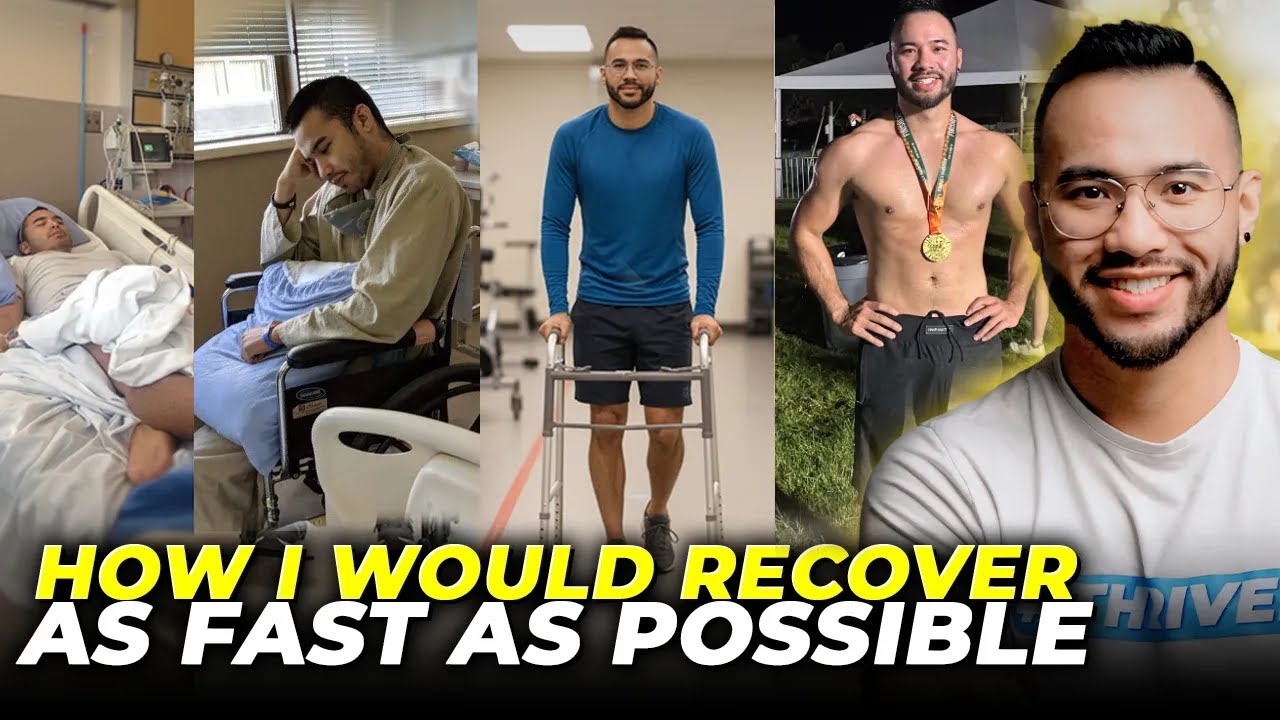
Watch: If I Got CFS Today, Here's What I'd Do
TL;DR Summary
- Remove all timelines, deadlines, and symptom tracking. They add pressure that slows recovery
- Prioritize recovery over everything. Clear your calendar and say no to non-essential commitments
- Build a list of fulfilling activities for both high-energy and low-energy days so you never feel like you're missing out
- When symptoms flare, keep it to two things: respond well (don't spiral) and pull back (reduce activity)
- Recovery curveballs happen even after major progress. The principles tend to hold up when you trust the process
- The strategies that made you successful before CFS often don't apply to recovery. This usually calls for a different operating system
Sources and References
- Vyas A, Mitra R, Shankaranarayana Rao BS, Bhatt S. "Chronic stress induces contrasting patterns of dendritic remodeling in hippocampal and amygdaloid neurons." Journal of Neuroscience. 2002. PubMed 12427850
- McEwen BS. "Physiology and neurobiology of stress and adaptation: central role of the brain." Physiological Reviews. 2007. PubMed 17615391
- Porges SW. "The polyvagal theory: new insights into adaptive reactions of the autonomic nervous system." Cleveland Clinic Journal of Medicine. 2009. PubMed 19376977