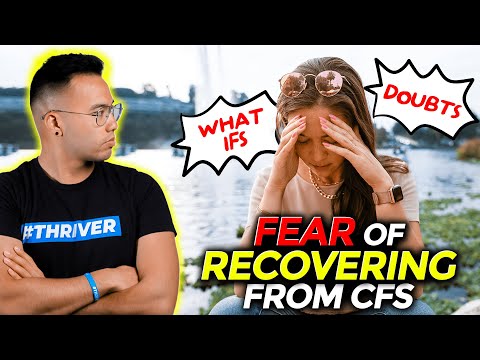
The Most Counterintuitive Fear
Nobody talks about this one. You've been sick for months, maybe years. You've lost your job, your social life, your independence. You've spent countless hours wishing you could just be normal again. And then someone tells you that part of you might actually be afraid of getting better.
Your first reaction is probably: that's ridiculous. Of course I want to get better. I'd do anything to feel like myself again. And you're right. You do want to get better. Consciously, completely, with everything you have.
But recovery isn't just a conscious decision. It involves the nervous system, and the nervous system operates by different rules. Understanding how the recovery process works can help make this clearer. It doesn't care what you want. It cares about what feels safe. And right now, for your nervous system, the current state, as painful as it is, is familiar. It's predictable. And the brain treats predictable as safe, even when predictable means suffering.
The nervous system's preference for the current state of things, even when that state is harmful. Change, even positive change, registers as uncertainty. And uncertainty registers as threat. This is why people sometimes resist the very thing they want most: because getting it requires moving through the unfamiliar.
The fear of recovery isn't a character flaw. It's not a sign of weakness or self-sabotage. It's a survival mechanism. Your brain has adapted to this state. It knows the rules of being sick. It doesn't know the rules of being well again. And the unknown is, by default, threatening.
What You're Actually Afraid Of
The fear of recovery usually isn't one big fear. It's a collection of smaller ones, running below the surface. Most people don't realize these fears are there until someone names them. Here are the most common ones we see.
Fear of relapsing. This might be the biggest one. What if you start getting better and then crash again? What if you let yourself believe recovery is possible and then lose it? The potential fall from hope feels worse than staying where you are. So the nervous system keeps you from hoping too much, as a protective measure.
Fear of expectations. Right now, expectations are low. People understand when you cancel plans or can't work. If you start getting better, those expectations come back. What if you can't meet them? What if people stop being patient? What if you're expected to perform at a level you're not ready for?
Fear of returning to what made you sick. Many people with CFS got sick in the context of burnout, overwork, or high stress. Recovery raises the question: do I go back to the life that did this to me? That's a terrifying prospect. Part of the fear of getting better is the fear of repeating the pattern that broke you down.
Many people in recovery realize something uncomfortable: part of them was using the illness as protection. They're terrified of going back to the pace they were living at before. Being sick gave them permission to stop. And letting go of that protection, even though being sick is miserable, feels genuinely scary.
Fear of losing the community. If your social connections are built around shared illness, getting better means moving away from them. That loss is real.
Fear of the unknown. You've adapted to being sick. You've built routines, coping mechanisms, ways of understanding the world. Recovery means disassembling all of that and building something new. The in-between space, where you're not sick enough to identify as ill but not well enough to be "normal," is deeply uncomfortable.
Why Your Nervous System Resists Change
Your nervous system's job is to keep you alive. Not happy. Not healthy. Alive. And it does this by favoring the familiar over the unknown. It's the same reason people stay in bad relationships, toxic jobs, or unhealthy habits. The known, even when it's painful, feels safer than the unknown.
In CFS, this plays out very specifically. Your nervous system has spent months or years in a dysregulated state. It's been on high alert. Every signal in your body has been organized around the illness: the fatigue, the symptom monitoring, the pacing, the avoidance of triggers. All of that is now "normal" for your brain.
When recovery starts happening, when symptoms shift, when energy starts to return, the nervous system notices the change. And change, any change, triggers a recalibration. Sometimes that recalibration shows up as increased anxiety, a sudden flare-up, or a strong urge to retreat back to the familiar pattern.
This isn't you failing. It's your nervous system doing what nervous systems do: resisting change until the new state proves itself safe enough to accept. And that's exactly why recovery needs to be gradual. Big, sudden changes overwhelm the system. Small, consistent steps give it time to adapt. This is the same principle behind neuroplasticity: repeated, calm experiences build new neural pathways.
Signs the Fear Is Running in the Background
The fear of recovery rarely announces itself. It doesn't show up as a clear thought like "I'm afraid to get better." It shows up as patterns you don't notice until someone points them out.
- Dismissing improvement. When something gets better, you immediately explain it away. "It's just a good day." "I'll probably crash tomorrow." You won't let yourself acknowledge progress.
- Increasing symptom focus as things improve. Paradoxically, some people monitor symptoms more closely when recovery starts. The better they feel, the harder they look for signs that something is still wrong.
- Avoiding expansion. You have the capacity to do a little more, but you don't. Not because you're pacing wisely. Because something holds you back that you can't quite name.
- Feeling anxious when you feel good. A good day triggers worry instead of relief. You're waiting for the other shoe to drop.
- Staying in illness-centered routines long after you have the capacity for more. The routine feels safe. Changing it feels risky.
If any of this sounds familiar, that's okay. It means you're human, with a nervous system that's doing its job. The goal isn't to eliminate the fear. It's to stop letting it run the show.
Working Through It
You can't override the fear of recovery with willpower. Telling yourself "just don't be afraid" is as useful as telling yourself "just fall asleep" when you have insomnia. The fear lives in the nervous system, not the rational mind. So the solution has to work at the nervous system level too.
Acknowledge it without judgment
Name the fear. Say it out loud or write it down: "Part of me is afraid of getting better." That's not weakness. That's awareness. And awareness is the prerequisite for change. You can't work with something you refuse to see.
Take micro-steps, not leaps
Small expansions give your nervous system evidence that change is safe. One slightly longer walk. One new activity. One conversation about something other than illness. Each micro-step that doesn't end in catastrophe rewires the fear pattern a little.
Let yourself celebrate small wins
When something goes well, resist the urge to dismiss it. Let it land. Let your nervous system register: "I did something new and I'm okay." These moments of safety build up over time and gradually reduce the fear response.
Remember: recovery doesn't mean going back
You don't have to return to the life that made you sick. Recovery means building something new, at your own pace, with the wisdom you've gained. You get to choose what you take into the next chapter.
The fear of recovery sounds impossible until you've felt it. And then it makes perfect sense. Many people also experience an identity crisis during this process, which feeds into the same dynamic. Your brain learned that the world is unsafe, and recovery asks it to trust again. That takes time. But every person we've worked with who's moved through this fear has come out more resilient than they were before.
The fear of recovery doesn't have to disappear before recovery begins. You can be afraid and still take the next step. You can doubt the process and still show up for it. You can feel the pull of the familiar and still choose to move forward. That's not bypassing the fear. That's walking right through it.
And on the other side, when you look back at this moment, you'll understand something important: the fear was never the obstacle. It was the doorway.
TL;DR Summary
- The fear of recovery is one of the most common and least discussed obstacles in CFS
- It's not about not wanting to get better. It's your nervous system resisting change
- Common fears: relapsing, returning expectations, going back to what caused burnout, losing community
- Your nervous system prefers known suffering over unknown possibility. That's biology, not weakness
- Signs: dismissing improvement, increased symptom monitoring during good periods, avoiding expansion
- Work through it with micro-steps, awareness, and gradual evidence that change is safe