What Brain Retraining Actually Is
Brain retraining is a set of structured exercises designed to change how your nervous system responds to the world. It uses your brain's natural ability to rewire itself (neuroplasticity) to build new, calmer neural pathways.
When you've been dealing with chronic illness, your nervous system gets stuck in a protective state. It's like a smoke alarm that won't stop going off. The alarm made sense when the original trigger happened (infection, stress, trauma). But now the trigger is gone and the alarm keeps sounding. Brain retraining teaches the alarm system to stand down.
The exercises are specific and repeatable. They target the limbic system (the part of your brain that processes threats) and the autonomic nervous system (the system that controls your stress response). By repeating certain exercises daily, you gradually build new neural pathways that respond with calm instead of alarm. You can learn more about the science behind this approach and why it works.
Your brain's ability to physically change its structure and function based on repeated experience. Neurons that fire together wire together. Brain retraining uses this principle deliberately: by practicing calm responses repeatedly, your brain builds stronger calm pathways and weakens the alarm pathways.
This isn't theory. Neuroplasticity is one of the most well-established principles in neuroscience. Your brain is changing all the time based on what you repeatedly do and experience. Brain retraining just makes that process intentional.
What Brain Retraining Is Not
There are a lot of misconceptions about brain retraining. Let's clear them up.
It's not positive thinking. Positive thinking is a conscious effort to change your thoughts. Brain retraining works at a deeper level. It targets automatic neural pathways that operate below conscious awareness. You can't "think positive" your way out of a stuck nervous system. You have to retrain the system itself.
It's not willpower. You're not pushing through symptoms or forcing yourself to feel better. Brain retraining is the opposite of forcing. It's about teaching your nervous system that safety exists, so it can gradually release the protective state on its own.
It's not ignoring symptoms. This is the most damaging misconception. Brain retraining doesn't ask you to pretend you're fine. It doesn't ask you to push through pain or fatigue. Your symptoms are real. They're produced by a real nervous system response. Brain retraining addresses the underlying pattern that's producing them.
It's not a quick fix. Your nervous system didn't get stuck overnight, and it won't unstick overnight. Brain retraining is a daily practice. Small, consistent repetitions over weeks and months is what creates lasting change. There's no shortcut. To understand what recovery actually looks like and realistic timelines, we've mapped the whole process out.
It's not a replacement for medical care. Brain retraining is a coaching and educational approach. It's not a medical treatment. Many people use it alongside whatever medical support they're receiving.
Brain retraining isn't about thinking your way out of illness. It's about giving your nervous system enough repeated evidence of safety that it finally starts to believe it.
How It Works (The Neuroplasticity Mechanism)
Here's what's happening in your brain when you do brain retraining exercises.
Your limbic system (particularly the amygdala) acts as your brain's threat detection center. In chronic illness, the amygdala gets stuck in a hyperactive state. It's constantly scanning for threats and constantly finding them. Normal sensations (light, sound, temperature, movement) get flagged as dangerous. This produces real physical symptoms: pain, fatigue, brain fog, sensitivities, crashes.
Every time the amygdala fires an alarm, it strengthens the alarm pathway. It's like walking the same path through a field over and over. The path gets deeper, wider, easier to follow. Your nervous system defaults to the alarm response because that pathway is the strongest one.
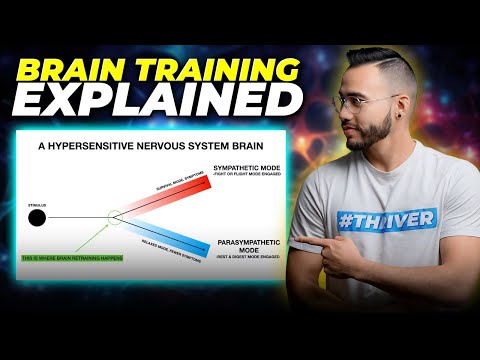
Brain retraining creates a new path. Each time you practice an exercise, you activate a different neural response: calm, safety, regulation. At first, this new path is faint. The alarm path is still dominant. But with daily repetition, the new path gets stronger and the alarm path starts to weaken. This is neuroplasticity in action.
The three-step mechanism
1. Interrupt the pattern. When your nervous system starts firing an alarm (symptom spike, fear response, catastrophic thinking), you interrupt it. You catch the pattern as it starts and consciously redirect your attention. This is the pattern interrupt.
2. Activate the alternative. You run a specific exercise that activates calm, safety, or positive engagement. Visualization, memory recall, sensory exercises, gentle movement. The specific technique matters less than the fact that you're activating a different neural state.
3. Repeat consistently. One session doesn't rewire your brain. A hundred sessions start to. A thousand sessions make the new pattern automatic. This is why consistency matters more than intensity. Ten minutes every day beats two hours once a week.
When the limbic system (amygdala, hippocampus, hypothalamus) gets stuck in a chronic state of overactivation. Normal inputs get processed as threats. The stress response stays on. Physical symptoms are produced and maintained by this loop. Brain retraining aims to gradually downregulate this pattern.
Why It Helps With CFS, Long COVID, and Fibromyalgia
CFS, long COVID, fibromyalgia, chronic pain, POTS, chemical sensitivities. These conditions look different on the surface. But they share a common thread: a nervous system stuck in a protective state.
In CFS/ME, the nervous system may stay in survival mode, producing crushing fatigue and post-exertional crashes. In fibromyalgia, central sensitization turns up the volume on pain signals. In long COVID, the immune-nervous system loop keeps firing long after the virus is gone. In POTS, the autonomic nervous system can't regulate properly.
A common thread we see across many of these is a nervous system that's overprotecting. It may be producing real symptoms because it reads normal signals as a threat. In our experience, brain retraining can help because it works on this shared pattern rather than chasing individual symptoms. If you're exploring whether your condition fits this pattern, our guide to understanding CFS is a good place to start.
We've seen this across thousands of recoveries. People with different diagnoses, different severity levels, different durations of illness. The common factor in recovery wasn't a supplement, a diet, or a medication. It was retraining the nervous system to shift out of protection mode.
Your body may not be broken. Your nervous system may be stuck. And what's stuck can be unstuck.
What Brain Retraining Actually Looks Like
Brain retraining isn't vague or mystical. It's structured, specific, and repeatable. Here's what a typical daily practice looks like.
Time commitment: 10-30 minutes per day. Some people start with just 5 minutes if that's what their energy allows. The exercises can be done from bed if needed.
Structured exercises: These typically include visualization (vividly imagining calm, safe, engaged experiences), pattern interrupts (catching the alarm response and redirecting it), sensory grounding (engaging your senses to anchor into the present moment), and gentle body-based exercises (slow breathing, progressive relaxation).
Throughout-the-day moments: Beyond formal practice sessions, brain retraining includes catching and redirecting alarm responses in real time. When you notice your nervous system ramping up (symptoms spiking, anxiety rising, catastrophic thoughts starting), you apply a brief interrupt and redirect. These micro-moments throughout the day are just as important as the formal sessions.
Progress tracking: Keeping a simple log of symptoms, energy, and practice helps you notice patterns and track progress over time. Progress in brain retraining isn't linear. It comes in waves. Having data helps you see the overall trend even during the dips.
The exercises are simple. The challenge is doing them consistently when you feel terrible. That's where coaching and community support make a significant difference. Having someone who's been through it, who understands the process, and who can hold you accountable makes the difference between practicing for a week and practicing for months.
How to Get Started
If you're new to brain retraining, here's where to begin.
Understand the principle. You're not trying to fix something broken. You're retraining a system that's stuck. Your symptoms are real. They're being produced by a nervous system that's overprotecting you. Brain retraining helps that system recalibrate.
Start small. Five minutes a day is enough to begin. Consistency beats intensity. A short practice you actually do every day will produce more change than a long practice you do once a week.
Be patient. Most people start noticing small shifts within 2-4 weeks. Meaningful changes often show up around the 2-3 month mark. Full recovery timelines vary widely. The nervous system works on its own schedule. That's normal.
Get support. Brain retraining is significantly more effective with guidance and accountability. A coach who's been through the recovery process themselves can help you stay consistent, navigate the hard days, and adjust your approach as you progress. See your recovery options to find the right level of support for where you are.
We've built our entire recovery system around structured brain retraining combined with coaching, community, and education. It's what's driven thousands of documented recoveries across every condition, severity level, and age group we've worked with.
TL;DR Summary
- Brain retraining uses structured neuroplasticity exercises to help your nervous system shift out of a stuck protective state
- It's not positive thinking, willpower, or ignoring symptoms. It works at the level of automatic neural pathways
- The mechanism: interrupt the alarm pattern, activate a calm alternative, repeat daily until the new pathway becomes dominant
- It helps with CFS, long COVID, fibromyalgia, and chronic pain because they share a common nervous system pattern
- Daily practice of 10-30 minutes, starting with as little as 5 minutes from bed if needed
- Most people notice initial shifts within 2-4 weeks, with meaningful changes around 2-3 months