From Bedridden With CFS to Power Walks On The Beach
"It feels like being reborn again, having a second chance in life."
Individual results vary. This is one person's experience and is not a guarantee of specific outcomes.
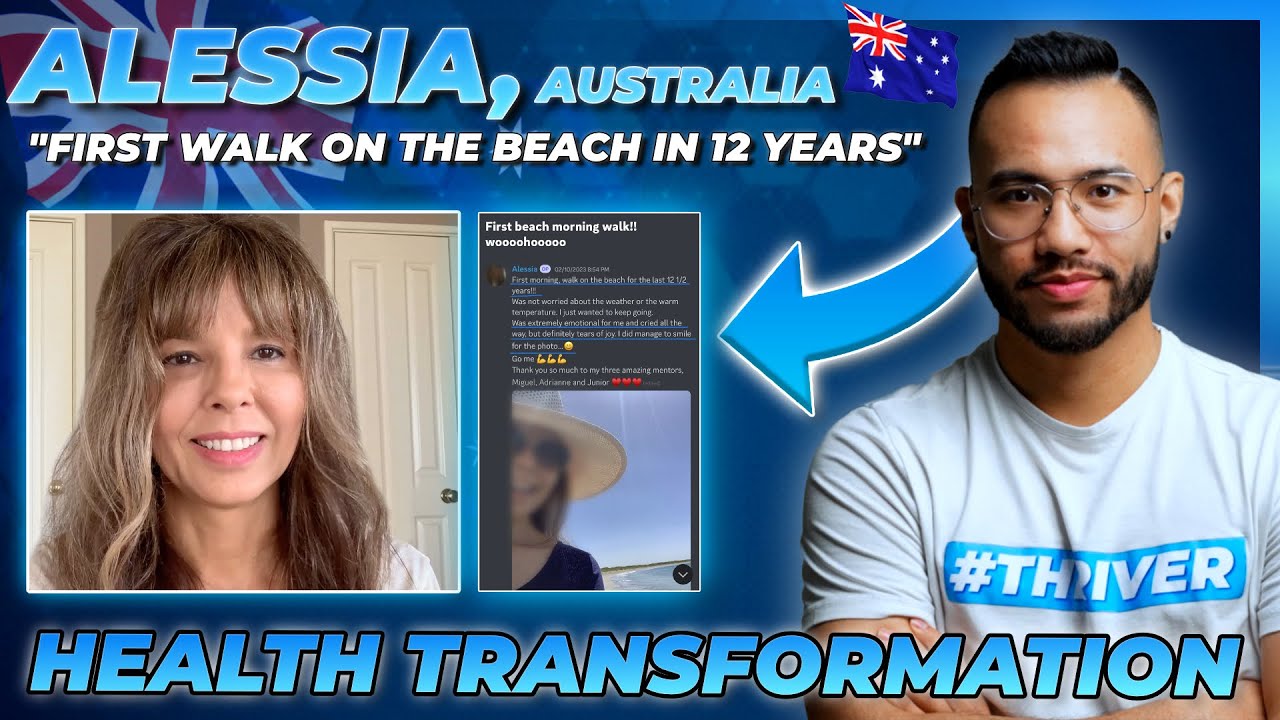
Watch Alessia's full recovery interview
Key Takeaways From Alessia's Recovery
| Condition: | ME/CFS for 12 years, including 6 months fully bedridden. Couldn't walk, talk, or even turn over in bed. |
| Treatments that failed: | Over $120,000 on specialists, clinics in Germany and Switzerland, brain electrode stimulation, immunology, and endocrinology. |
| What worked: | CFS Recovery's recovery system, built on nervous system retraining. Two weeks to understand the approach, then a "mind switch" that changed everything. |
| Timeline: | Housebound to 40-minute power walks in under 3 months. First beach walk in 12 years. First swim in the ocean in 12 years. |
| Now: | Power walking, going out for lunches, getting facials, listening to music, doing 30 squats daily, and rebuilding her life. |
How Alessia's CFS Started: A Gradual Decline Over 12 Years
Alessia's life before CFS was full. She ran a business in Perth, Western Australia. She worked hard, traveled hard, went out for dinners, caught shows on weeknights. She was outgoing, active, and loved every minute of it.
But she also carried a lot of stress, along with unresolved trauma from her younger years. The decline didn't happen overnight. It crept in gradually, getting worse and worse each time. One day, she was walking up a set of stairs and couldn't go any further. She froze. Her legs just stopped working.
Then came a walk to the beach, just five minutes from her home. She got there and couldn't take another step. That's when she knew something was seriously wrong. The pattern of gradual nervous system breakdown is extremely common in ME/CFS. Stress, trauma, and overwork push the body past its threshold, and it gets stuck in a survival state.
How Bad Did Alessia's Symptoms Get?
At her worst, Alessia was completely bedridden for six months. She couldn't walk. She couldn't talk. She couldn't even turn over in bed. She was in so much pain that there wasn't one part of her body that felt safe. And this was someone who'd never even had a headache before getting sick.
The full picture of her symptoms
Alessia had every symptom in the book. Unbearable full-body pain. Brain fog so severe she'd forget her brother's kids' names mid-conversation. She'd be speaking to a client at work and completely blank on what she just said. She had to write everything down, even personal details about people she worked with, just to get through the day.
Her temperature sensitivity was extreme. She couldn't tolerate hot weather or even wind. The wind would cause searing pain in her teeth and jaw. She couldn't go outside when it was hot without being knocked out for a week. Her skin was so sensitive she couldn't handle anyone touching her. Massages, facials, anything on her skin would send her nervous system into overdrive.
She also dealt with crippling restless legs for four years straight, hair loss, severe light and sound sensitivity (she went over 11 years without being able to listen to music), and food sensitivities that made eating a constant source of anxiety.
Running a business while bedridden
Even during the worst of it, Alessia tried to keep her business running. She'd get driven to work, spend barely an hour doing what she could, then get driven back and collapse in bed for the rest of the day. Eventually, she had to sell her business at a steep loss. But she saw it as part of the bigger picture.
What Treatments Did Alessia Try Before CFS Recovery?
Alessia spent over $120,000 on treatments over 12 years. She stopped counting after that number. She tried everything she could find, including treatments most people have never even heard of.
The full list of what she tried
She traveled to clinics in Germany and Switzerland. She went across Australia to see an immunology specialist. She tried brain electrode stimulation, which made things worse because it overstimulated her already-overactive nervous system. She saw endocrinologists who ran massive panels of tests only to tell her they couldn't find anything wrong.
That moment captures what so many people with ME/CFS experience. You're clearly struggling, the symptoms are real, but the tests come back normal. And then you're told there's nothing that can be done. This is the pattern we see over and over again with our clients. Thousands of dollars spent on treatments that target symptoms instead of addressing the root cause: a dysregulated nervous system.
The worst part wasn't the money
Beyond the financial cost, the emotional toll was crushing. People didn't believe how sick she was. On the outside, she looked fine. She'd put on a brave face and push through. But inside, she was fighting just to exist. Family members couldn't understand because they hadn't been through it. Doctors were condescending. Facebook support groups were just endless negativity. When she finally started recovering and tried to share hope with others, she got kicked out of those groups.
How Did Alessia Find CFS Recovery?
Four years before finding CFS Recovery, Alessia made a decision. She told herself she wasn't going to see any more doctors. No more specialists. She was done chasing treatments that didn't work. She'd just do her best and try to get by.
Then she came across Miguel's YouTube videos. What stopped her scrolling was something specific: the way Miguel described his own symptoms. She'd never heard anyone describe the experience so accurately. It couldn't be faked. Only someone who'd actually been through it would know exactly what those symptoms feel like.
Why this approach was different
After speaking with the team and learning that every coach had personally recovered from CFS, Alessia decided to join. The fact that the coaches had been through it themselves was everything. For the first time, she had people who genuinely understood. No explanations needed. No judgment. Just knowing.
How Quickly Did Alessia's Recovery Progress?
Alessia joined the program in mid-January. It took her about two weeks to understand what the program was really about. Then she had what she calls her "mind switch" moment. Once that clicked, everything changed fast.
The first wins
Her restless legs, which had tortured her for four years straight, improved. Her sleep got better. And most importantly, her smile came back. She went for her first morning walk and was so moved that she cried. Walking outside in the morning, something most people take for granted, felt monumental after 12 years of being trapped.
Before vs. after: Alessia's recovery by the numbers
| Metric | Before Recovery | After Under 3 Months |
|---|---|---|
| Walking ability | Couldn't walk 5 min to the beach | 40-minute power walks |
| Beach access | Hadn't been in 12 years | Walking and swimming in the ocean |
| Touch tolerance | Couldn't tolerate any touch | Full facials and massages |
| Temperature sensitivity | Couldn't shower with warm water | Hot showers, no weather restrictions |
| Music | 11+ years without music | Blasting music in the car |
| Physical strength | Couldn't turn over in bed | 30 squats daily |
| Reading | Couldn't read one page | 10-20 pages at a time, retaining it |
The progression kept building. One week she was doing wall squats from a chair. Then 30 squats a day. She went from not being able to step outside to walking back from lunch with her parents and going straight into another 40-minute walk. Something she hadn't done in 12 years. Ever.
The Beach Walk That Changed Everything
One of Alessia's biggest wins came when she walked to the beach for the first time in 12 years. She used the tools the program gave her, built herself up gradually, and one day decided: "If I can do this, let's do it."
The next time she went, she didn't just walk. She got in the water. For the first time in 12 years, she was in the ocean. She took a photo standing in the water, arms stretched up toward the sky. She posted it in the community, and everyone celebrated with her.
What Made The Program Work For Alessia?
Alessia points to three things that made the difference. First, the "mind switch." Understanding that her body wasn't broken, that her nervous system was stuck in a pattern, changed everything. Once she understood how the brain was communicating with her body, recovery accelerated.
The power of personalized coaching
Second, the personalized 1-on-1 support. Her coach Adrienne built a plan specifically for where Alessia was starting from. Not a generic program. A plan tailored to her capacity, her symptoms, and her goals. Alessia started with tiny wall squats. Now she's doing 30 a day and aiming for 60.
Community that understands
Third, the community. Alessia was nervous about the group Zoom calls at first. She's a private person. But once she let her guard down, she realized everyone in the group was going through exactly the same thing. Seeing other people's wins, people having babies, getting married, going on vacations, it gave her fuel. The wins channel became a daily source of motivation.
Alessia's 1-Year Update: Celebrating Life Again
One year after her initial recovery interview, Alessia came back to share her continued progress. After 12+ years of CFS that left her bedridden, unable to walk, talk, or even turn over in bed, her transformation has only deepened.
Where she once couldn't imagine a future, she's now celebrating life again. The power walks on the beach were just the beginning. A full year out, she's living proof that recovery isn't temporary. It sticks.
Where Is Alessia Now?
Alessia isn't 100% yet at the time of her interview, and she's honest about that. She still has some stomach issues and she's not running yet. But she's clear on one thing: she's a completely different person than she was three months ago. And her trajectory is pointing straight up.
She's doing 40-minute power walks. Going out for lunches and coffees with friends. Getting facials and massages without pain. Listening to music at full volume in the car. Doing squats every day. Reading books again. Walking up stairs without thinking about it. Swimming in the ocean. Washing her hair with hot water. Eating chocolate at Easter without a flare-up.
Her story is one of over 70+ documented recovery interviews from people across 20+ conditions who've gone through CFS Recovery's recovery systems. We've worked with people as young as 9 and as old as 86, and with illness durations from 3 months to 50 years.