Struggling to Sit Up to Shoulder Stands at 58
"People need to know that they can start making plans again. I can do what I want to do more of it without always finding a way out."
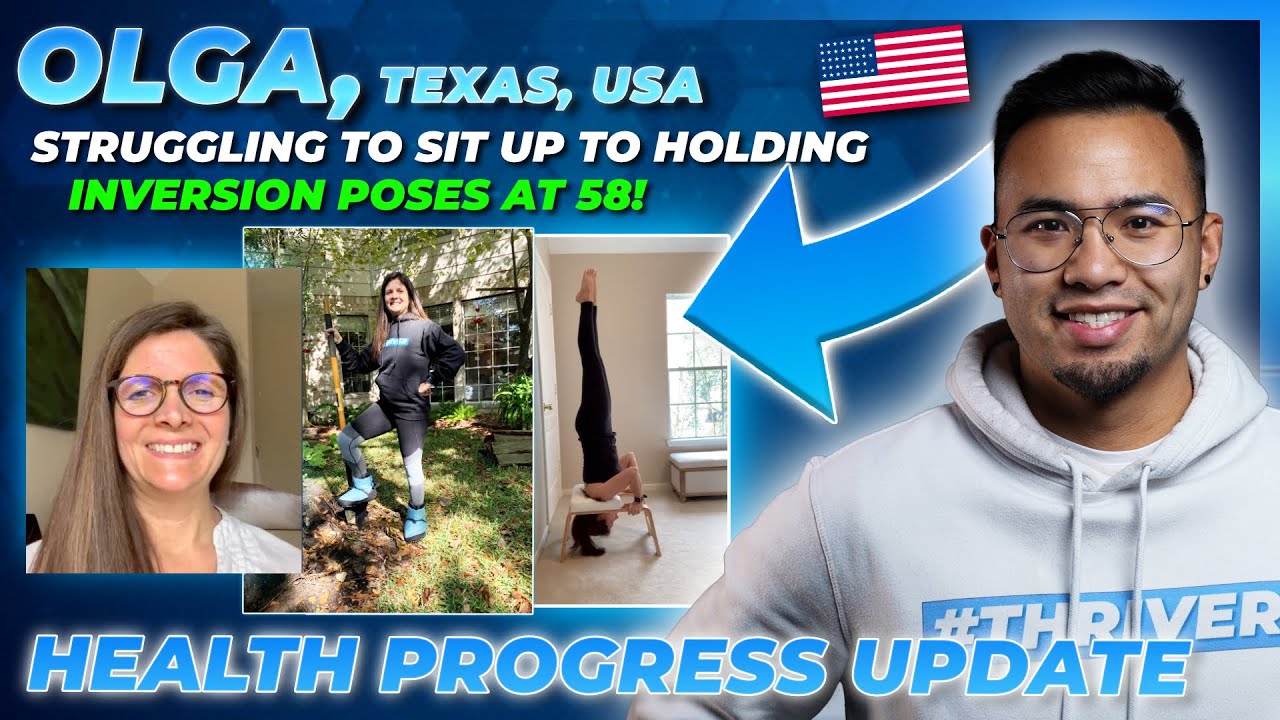
Watch Olga's full recovery interview with Miguel Bautista
Key Takeaways From Olga's Recovery
| Condition: | ME/CFS and POTS, triggered by a viral infection in March 2020. Housebound for over 2 years. |
| Treatments that failed: | Cardiologist, rheumatologist, neurologist, neuromuscular specialist, anti-inflammatories, strict elimination diet for a year. |
| What worked: | CFS Recovery's nervous system retraining program with group coaching and community support. |
| Timeline: | From unable to sit upright to doing yoga inversions in 5 months. Recovering faster from adjustment periods. |
| Now: | Doing headstands, hosting dinner parties, buying a car, driving again, and making plans for the future. |
What Caused Olga's Chronic Fatigue Syndrome and POTS?
Olga was the picture of health before all of this started. She'd been teaching yoga for 20 years, working full time in real estate, and going on long daily walks with her husband. Her yoga students were stunned when they found out she was struggling. As she put it, they always saw her as "somebody who was healthy."
The viral trigger that changed everything
In March 2020, Olga taught her last yoga class on a Monday. By Tuesday, she felt a sore throat coming on. About 11 days later, she was diagnosed with a viral infection of unknown cause. It wasn't the worst infection. It felt like a mild flu. The problem was that things kept getting worse afterward.
Three weeks in, the pain started moving around her body. Hip, rib cage, back. It intensified with any exercise. She'd go for a walk and come back unable to shower. This pattern of post-viral onset is extremely common in ME/CFS. The body gets stuck in a stress response, and without the right approach, it stays stuck.
How Bad Did Olga's ME/CFS and POTS Symptoms Get?
Within weeks of the viral infection, Olga's symptoms spiraled. She developed double vision, chest pain, left arm pain, and was convinced she was having a stroke or heart attack. She was terrified of going to the emergency room because of COVID, so she stayed home with these frightening symptoms while her mind spiraled into worst-case scenarios.
The breaking point: forgetting her own address
On top of the pain and fatigue, the cognitive symptoms were devastating. The brain fog got so severe that she couldn't remember her own address after living in the same home for five years. She sat there in a blank, unable to recall the number. She couldn't remember client names. She couldn't make decisions anymore.
Olga kept working in real estate for another year, trying to close out what was in her pipeline. But she was barely hanging on. Her husband drove her to title company closings. She stopped cooking, stopped grocery shopping, stopped leaving the house. She was housebound. On her worst days, she'd budget for cleaning one bathroom sink, and that was all she could handle.
She was later diagnosed with POTS after fainting during a tilt table test just 15 minutes into what was supposed to be a 2-hour test. Her blood pressure was consistently dropping to 84-85 systolic. She couldn't drive. She couldn't take warm showers. She walked like, in her own words, "a 90-year-old" for just 5 to 10 minutes a day, with her husband wobbling alongside her to keep pace.
What Treatments Did Olga Try Before CFS Recovery?
Over two years, Olga saw a cardiologist, rheumatologist, neurologist, neuromuscular specialist, and immunologist-allergist. She lost count of how much blood they drew. Every single test came back normal. Not even inflammation markers showed up. It was maddening.
The cycle of tests and empty answers
Her cardiologist put her through a stress test where she fainted and shook for 30 minutes after the first injection. Her neurologist did the entire appointment by phone from a separate room. She was offered gabapentin, Lyrica, anxiety medications, and anti-inflammatories. None of the anti-inflammatories touched the pain.
The only thing that gave her a small boost was a strict elimination diet for a full year. She cut out processed foods, sugar, caffeine, dairy, and went on a low-histamine protocol. It gave her a little bit of extra energy, but it was nowhere near getting her life back. And she was just eliminating, eliminating, eliminating. Her world kept getting smaller.
The worst part came when she was tested for neuromuscular diseases that have no cure. The testing was painful. The potential treatments were frightening. But the tests came back clear. That's when she knew she needed a different approach entirely.
How Did Olga Find CFS Recovery's Program?
Olga stumbled onto a YouTube channel about ME/CFS recovery stories. She started watching video after video. Then she found CFS Recovery's channel, and everything clicked.
Why this approach was different
What made CFS Recovery stand out wasn't just the content. It was the simplicity and the calm. After years of doctors scaring her with worst-case scenarios and painful tests, she found a program that led with safety instead of fear. She immediately recognized her experience in the nervous system retraining approach. For the first time, it all made sense.
Even though she'd been a yoga teacher for two decades with a full toolkit of relaxation techniques, she couldn't use any of them. She was too afraid. As she said, those tools matter, but they're not as important as the mindset. Knowing you're safe is the key thing. Her nervous system was so dysregulated that her own expertise couldn't reach her.
How Did Olga's Recovery Progress?
In just five months in the program, Olga went from unable to sit upright to doing yoga inversions and headstands at age 58. After 33 years away from inversions, she never thought her body would be able to hang upside down again. At her lowest point, she'd thought she'd never do another inversion in her life because she was convinced she was having a stroke.
Before vs. after: Olga's recovery by the numbers
| Metric | Before Program | After 5 Months |
|---|---|---|
| Sitting upright | Couldn't hold head up | Doing headstands and inversions |
| Walking | 5-10 min, wobbly, needed help | Extended walks independently |
| Socializing | Always planning an exit | Two dinner parties in one weekend |
| Driving | Unable to drive | Buying a new car |
| Daily capacity | One bathroom sink per day | Full activities without crashing |
| Sleep | 2-hour blocks, unable to fall asleep | Consistent, restorative sleep |
The mindset shift that changed everything
One of Olga's biggest breakthroughs came during a coaching call. She had a drooping eye, a symptom that terrified her because it pointed toward neuromuscular disease. Miguel asked her a simple question: "Have you had this before?" Yes. "Did it go away?" Yes. "It'll go away again."
That simple reframe became her anchor. She used it in her hardest moments. During adjustment periods when she didn't have the mental capacity for complicated techniques, she kept it as simple as possible: this is a nervous system thing. Respond well, and you'll get better.
What Made the Biggest Difference?
When asked about her favorite parts of the program, Olga didn't hesitate: the group coaching calls and the community. She looked forward to her twice-a-week meetings with everyone. Seeing other people's progress lifted her spirits on the hardest days.
Community as a recovery tool
She'd tried other group programs before with hundreds of people on calls where you couldn't even ask questions. CFS Recovery's intimate group format was completely different. Everyone had a chance to ask questions, share progress, and support each other. And with brain fog, being able to interact freely without having to submit questions in advance made all the difference.
The coaching also helped with something Olga called decision fatigue. When you're that exhausted, you can't even decide if something is a good idea or not. Having coaches to guide those decisions, whether to push a little or rest, took a massive weight off her shoulders.
Olga's 1-Year Update: Holding Inversion Poses at 58
Olga's one-year update is remarkable. The woman who needed wheelchair assistance at airports, who had to pay for flight upgrades just to lie down, who couldn't stand in line without collapsing, is now holding inversion poses at 58.
Despite being a yoga teacher for two decades, her own tools couldn't reach her during illness. The nervous system was too dysregulated. Now, a full year after recovery, she's not just doing yoga again. She's doing shoulder stands and inversions that most people half her age can't manage.
Her story proves that age is no barrier to recovery. At 58, she's more physically capable than she was before CFS.
Where Is Olga Now?
Olga is doing yoga inversions and headstands at 58, hosting dinner parties, buying a car, and making plans for the future. She hosted a Christmas party, Thanksgiving, New Year's Eve, and then two dinner parties on a single weekend, fully present and engaged without needing to retreat to the bedroom.
She's recovering faster from adjustment periods. When she does have a small dip, it doesn't scare her anymore. It passes quickly. She's no longer looking for exit strategies at social events. She's not worried about whether she'll have enough energy.
As she put it: "People need to know that they can wear makeup again. Because we give up everything. Even trying to look a little bit put together. We give up everything, and we don't have to."
Olga's story is one of over 70+ documented recovery interviews from people across 20+ conditions who've gone through CFS Recovery's programs. Her message to anyone still on the fence is simple: "Don't hesitate. Give it a shot. You're going to find the best support you can possibly find in this group."