Long COVID, CFS, and Fibromyalgia: How Brent Is Recovering
"The combination of coaching, community, and the recovery system is what made the difference for me."
Individual results vary. This is one person's experience and is not a guarantee of specific outcomes.
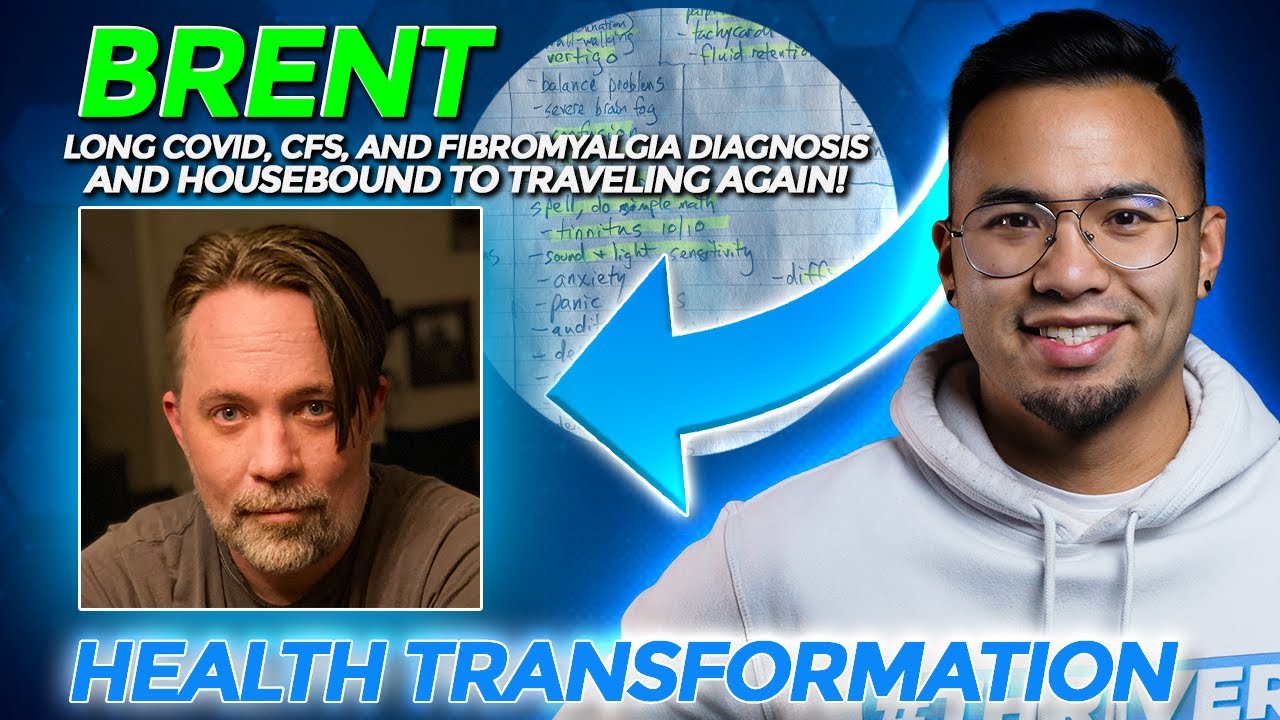
Watch Brent's full recovery interview
Key Takeaways From Brent's Recovery
| Conditions: | Diagnosed with Long COVID, CFS, and fibromyalgia. Triple diagnosis at age 49. |
| Hidden blocker: | Excessive screen time (8-10 hours/day) was silently holding back his progress without him realizing it. |
| What worked: | CFS Recovery's coaching, community support, and recovery system, built on nervous system retraining. |
| Key insight: | Reducing phone usage led to significant drops in headaches, brain fog, body pain, and fatigue. |
| Now: | Actively recovering with improved energy, reduced symptoms, and a clear path forward. |
How Brent Ended Up With Three Diagnoses
Brent's health decline started the way it does for so many people. COVID hit, and he never fully bounced back. What began as post-viral fatigue turned into something much bigger. Eventually he was diagnosed with Long COVID, chronic fatigue syndrome, and fibromyalgia. Three separate diagnoses, all pointing to the same underlying problem: a nervous system stuck in overdrive.
This pattern is common. As Miguel explains in Brent's interview, "a lot of people, they're on the verge of getting a hypersensitive nervous system. And then all it takes is something like COVID to push them over the edge. This is why so many people are getting long COVID." The body was already running close to its limit. COVID was the straw that broke the camel's back.
The overlap between Long COVID, CFS, and fibromyalgia
Having all three conditions at once sounds overwhelming. But they share a common root. All three involve a hypersensitive nervous system that's stuck in a stress response. The fatigue, the pain, the brain fog, the crashes. They all come from the same place. That's why addressing the nervous system, rather than chasing each diagnosis separately, is what actually moves the needle.
The Hidden Blocker Brent Didn't See Coming
One of the biggest breakthroughs in Brent's recovery came from something he never would have suspected on his own: his phone. Like many people stuck at home with fatigue, Brent was spending 8 to 10 hours a day on screens. Scrolling social media, watching YouTube, checking messages. It felt harmless. It felt like resting.
It wasn't.
Why screens are so draining for a sensitized nervous system
People with CFS, Long COVID, or fibromyalgia have a much lower stimulation threshold than average. Their nervous system can only handle so much input before it starts pushing back. And screen time is far more stimulating than it feels.
Every second on your phone, your brain is analyzing shapes, tracking objects, processing colors, anticipating movement, and unpacking massive amounts of visual data. While it feels like a relaxing, low-intensity activity, cognitively it's extremely demanding. You might feel like you're resting in bed, but your brain is working hard.
That's why people can scroll for a while and then start getting eye pain. Then headaches. Then body pain. Then a full crash. It's a pattern CFS Recovery's coaches have seen across hundreds of clients, regardless of their country, how they got sick, or what stage of recovery they're in.
The Pattern CFS Recovery's Coaches Keep Seeing
Brent's experience with screen time wasn't unique. It's one of the most consistent patterns the coaching team identifies. Clients reach out saying they got hit with a migraine or a wave of symptoms out of nowhere. They were in bed all day. They were resting. Nothing happened.
Then the coaches start asking questions. "How about this? Did something happen? How's your family? Is there an emotional situation coming up?" And eventually they get to the screen time question. And nearly every time, the answer is the same: the person had been on their phone for 8 to 10 hours over the last few days.
Coaching catches what you can't catch alone
This is exactly why Brent says the combination of coaching, community, and the recovery system is what made the difference. On your own, you'd never think to question your phone usage. It seems so innocent. But having coaches who've worked with thousands of people means they can spot the patterns you can't see.
They've done case studies on people across the board. They've tested removing screens and tracked the results. The pattern holds. Every time. When screen time goes down, headaches drop, symptoms decrease, energy goes up, and brain fog lifts. Not always completely, but the improvement is significant and consistent.
What Brent Learned About the Stimulation Threshold
One of the biggest concepts that clicked for Brent was understanding his stimulation threshold. An average person can handle a high level of daily stimulation: conversations, work, exercise, screens, noise, food, all of it. Someone with CFS, Long COVID, or fibromyalgia has a threshold that's way lower.
It doesn't take much to push past it. And when you do, the body pushes back hard. That's where the crashes come from. That's where the pain flares. That's where the fatigue spikes that seem to come out of nowhere.
Before vs. after: Brent's recovery progress
| Metric | Before Recovery | During Recovery |
|---|---|---|
| Screen time | 8-10 hours/day | Reduced by 75% |
| Headaches | Frequent, unexplained | Significantly reduced |
| Brain fog | Constant | Clearing up |
| Body pain | Daily fibromyalgia pain | Noticeably improved |
| Energy | Wiped out, stuck at home | Steady improvement |
| Understanding of condition | Confused, frustrated | Clear framework for recovery |
Understanding the stimulation threshold changed everything for Brent. Instead of feeling like symptoms were random and unpredictable, he had a framework. He could see why certain things triggered crashes and what to do about it. That shift from confusion to clarity is one of the first things people notice in the program.
Why this matters for the human timeline
Miguel puts it into perspective in the interview. For most of human history, we were hunter-gatherers. The brain evolved to handle a certain level of stimulation. Then came the agricultural revolution, then the technological revolution. And in just the last 20 to 50 years, the amount of stimulation we face daily has gone through the roof.
Our brains haven't caught up. Most people can handle it. But for a growing number of people, the nervous system hits its limit. Add something like COVID on top of that, and the system tips over. That's the picture Brent was staring at when he first got sick. And understanding it was the first step toward changing it.
What's Working for Brent Now
Brent's recovery isn't just about cutting screen time. That was one piece. The bigger picture is the nervous system retraining approach that runs through everything in the program. He's learning to recognize his body's signals, respect his stimulation threshold, and gradually expand what he can handle.
Instead of spending hours on his phone, he's switched to more passive activities. Podcasts. Audiobooks. Things that give his brain some engagement without the visual processing overload. That simple swap has made a measurable difference in his daily symptoms.
The coaching calls and community keep him accountable and on track. He's part of a group of people who get it. People who understand what it's like to look fine on the outside while struggling on the inside. That support system is something he didn't have before joining the program.
Where Brent Is Headed
Brent is still on his recovery journey, and he's making real progress. He's not at the finish line yet, but he can see it. The combination of coaching, community, and the recovery system has given him a clear path forward. Something he didn't have when he was trying to figure it out alone with three different diagnoses and no direction.
His story is one of over 70+ documented recovery interviews from people across 20+ conditions who've gone through CFS Recovery's recovery systems. Every single one of them started exactly where Brent started. Stuck, confused, and wondering if things could actually get better.