Unstoppable Hope: Jon's Road to Recovery and Renewed Life
"My life is 'perfectly imperfect' right now and that is OK. I will one day surf again, I will one day be fully healed!"
Individual results vary. This is one person's experience and is not a guarantee of specific outcomes.
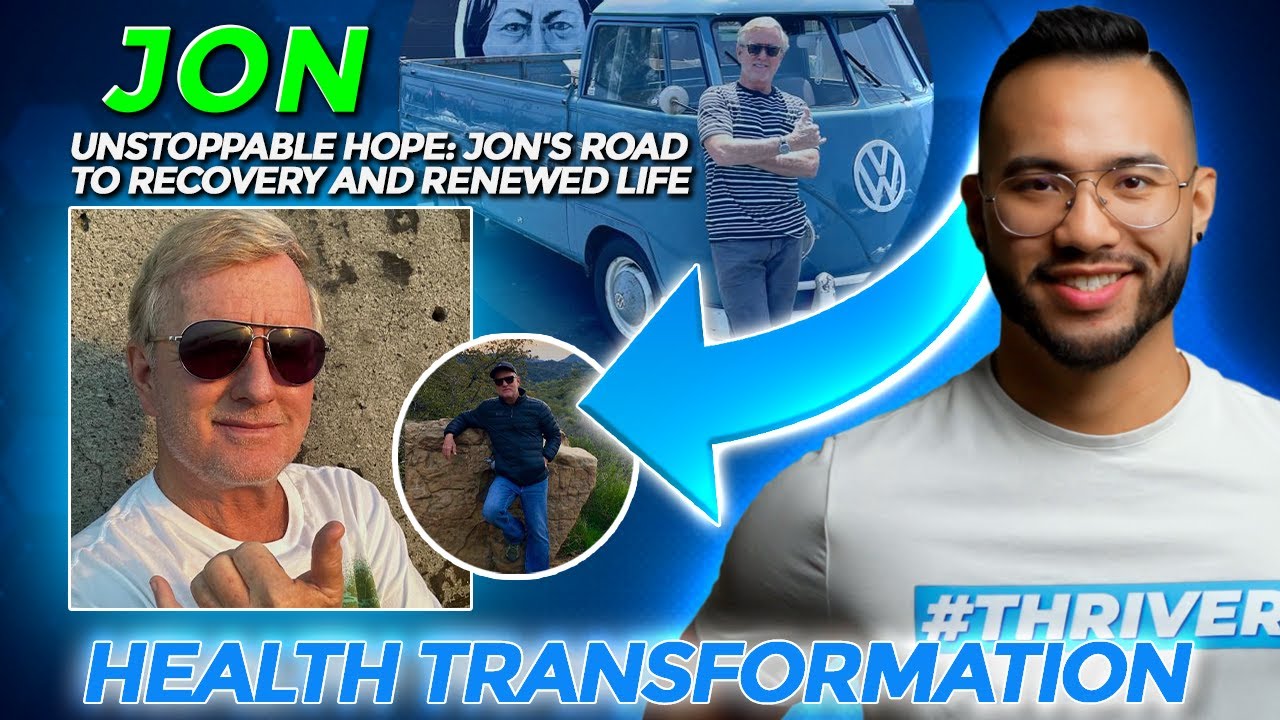
Watch Jon's full recovery interview with Miguel
Key Takeaways From Jon's Recovery
| Condition: | ME/CFS triggered by Epstein-Barr virus reactivation and overtraining for a triathlon. Recurring episodes over 20+ years. |
| Treatments that failed: | Myers cocktail IVs, blood ozone, peptides, mold testing, Lyme clinic in Mexico (sedated and heated to 115 degrees), vegan diet, wheatgrass cleanses, colonics. |
| What worked: | CFS Recovery's recovery system, built on nervous system retraining. Understanding that it's the nervous system, not just a virus. |
| Mindset shift: | Stopped researching endlessly and stopped chasing medical treatments. Learned to listen to his body instead of pushing through. |
| Now: | Active, hopeful, and building toward full recovery with a clear roadmap. Plans to surf again. |
What Caused Jon's Chronic Fatigue Syndrome?
Jon's CFS story started decades ago. In college, he got a bad case of mono (Epstein-Barr virus). While most people recover from mono and move on, the virus stays in the body. In Jon's case, it came back three separate times during periods of extreme stress over the following decades.
His most recent and longest episode began in 2018. He was in great shape, surfing, hiking, and running. Then he decided to train for a triathlon. As Jon described it: "I jump into things all in at the deep end. I don't go into the shallow end and put my toe in. I just jump in."
The "no pain, no gain" trap
Jon trained harder and harder. When his body sent warning signals to rest, he ignored them. He pushed through with a "no pain, no gain" mindset. His body was sending clear signals that a wall was ahead. He didn't listen.
This pattern is extremely common in CFS and post-viral fatigue. High-achievers, athletes, and Type-A personalities push until their nervous system can't keep up. The body doesn't just get tired. It gets stuck in a stress response and can't switch off.
How Bad Did Jon's CFS Symptoms Get?
Jon described his energy like a cell phone with barely half a bar left. At his lowest, he could barely walk from his living room to the mailbox. That short walk felt like lugging a Volkswagen up a mountain. He experienced chest pains, shortness of breath, arm tingling, and fatigue so deep he couldn't form words.
The Colorado trip that made everything worse
When the symptoms first hit, Jon hadn't told his girlfriend Annie about his history with CFS. They had a trip planned to Colorado for a concert at Red Rocks. Instead of telling her, he went anyway. He masked everything. Chest pains, arm tingling, fatigue. He gritted through the altitude, the rich food, the late nights.
Each day got worse. By the time they flew back to Hawaii, his body completely gave out. As Jon put it: "Everything just crashed. That was the wall."
The brain fog and insomnia spiral
Jon's sleep was terrible. He was completely burned out but couldn't sleep, which made everything worse. In the mornings, he'd sit on the sofa with Annie while she'd get ready for her day. She'd leave and he'd be stuck at home. He worked hard to even articulate what he felt. Forming words was that difficult. That's how deep the brain fog went.
What Treatments Did Jon Try Before CFS Recovery?
Jon tried just about everything. Over four years, he went through an exhausting cycle of tests, treatments, and disappointments. Blood work came back normal every time. The only thing that showed up was elevated Epstein-Barr virus titers.
The IV and supplement rabbit hole
Jon was getting Myers cocktail IVs sometimes twice a week. He did blood ozone therapy (where they draw your blood, oxygenate it, and put it back). He took vitamin B injections, peptides, and went through mold testing and food sensitivity testing. His veins got so scarred from all the needle sticks that getting a normal blood draw became difficult.
The Lyme disease rabbit hole
After everything came back negative, one doctor suggested Lyme disease. Jon went down what he called "a true rabbit hole." His blood was sent to Germany and multiple other labs. Results were confusing and contradictory. Some said positive, some said negative, some said the negatives could be false negatives.
That led him to a high-end clinic in Baja, Mexico. Beautiful, resort-like facility on the water. Very expensive. He went for two separate two-week stays. The treatments included barometric pressure chambers, light therapy, more IVs, and the most extreme treatment of all: Lyme hyperthermia.
The theory was that heating the body would break down the protective coating on Lyme bacteria so antibiotics could destroy them. Instead, it destroyed Jon. He crawled out of that place. It took months just to recover from the treatments themselves. Each session left him feeling like he was at the edge. The weight loss was extreme. The recovery was brutal.
If the clinic had been in the States, the cost would've been over $100,000 for the full treatment.
The wheatgrass and cleanse phase
After the Lyme clinic, Jon took recovery into his own hands. He tried a vegan diet. He went to a cleanse center in San Diego for a week of wheatgrass juice, enemas, and colonics. That also made him weaker. Every new treatment carried the same pattern: hope followed by disappointment.
How Did Jon Find CFS Recovery's Program?
In late 2022, Jon's symptoms came back in full force. Life stressors piled up. He wasn't sleeping well, started over-exercising to help with sleep, and had a few too many drinks at night. One day he woke up and the CFS was back in full force. He'd had about a year of improvement from a brain retraining program he'd found in 2021, but he wasn't fully recovered. The flare-up hit hard.
Two months in, Jon was getting depressed. He'd tried another online brain retraining program, walking around his room on squares on the floor with the door closed. He felt very alone.
Why CFS Recovery clicked
Jon watched Miguel's interview with Raelynn, then kept watching more case study videos. He ordered Miguel's book and read it cover to cover. What stood out to him was that Miguel had actually been through it himself. He wasn't just talking about recovery from the outside.
Jon wrote detailed paragraphs about how excited he was before his application call. He sent Miguel pictures of Hawaii sunsets. He called it his "A-plus paper" because there was no way he was going to miss getting into the January 2023 group.
The first brain retraining program vs. CFS Recovery
Jon had tried brain retraining before, through a program based on Dr. Norman Doidge's work on neuroplasticity ("The Brain That Changes Itself"). It gave him an important paradigm shift. For the first time in decades, he understood that something bigger than a virus was driving his symptoms. His limbic system and his thoughts were creating fear responses in his body.
He improved for about a year on that program. But it was self-guided. Just him and a screen. No community. No coaching. No one who understood what he was going through. When life stressors hit in October 2022, he had no safety net and his symptoms came flooding back.
CFS Recovery was different. The nervous system retraining approach was streamlined and clear. The community meant he wasn't alone anymore. The coaching meant someone was there when things got tough.
Jon's Progress With CFS Recovery
Jon came into the program in January 2023 at what he described as "almost square one." A bad flu in November-December 2022 had walloped him on top of his flare-up. He could barely walk to the mailbox. Brain fog so thick he couldn't form words. Battery completely drained.
Before vs. after: Jon's recovery progress
| Metric | Before Recovery | 6 Months In |
|---|---|---|
| Physical capacity | Couldn't walk to the mailbox | Active and building capacity |
| Brain fog | Couldn't form words | Clear enough to articulate his journey |
| Mindset | Depressed and isolated | Hopeful and committed to full recovery |
| Treatment approach | Chasing medical fixes, spending thousands | Nervous system retraining, no more rabbit holes |
| Research habits | Constant Googling and health anxiety | Stopped researching. Focused on the work. |
| Community | Felt completely alone | Connected with coaches and fellow recoverers |
One of the biggest shifts for Jon was stopping the research. He described pressing the "off button" on endless Googling as one of the best things he ever did. Instead of chasing the next treatment, he committed to the program and trusted the process.
Jon's story is still being written. He's building toward full recovery with the goal of surfing again. His attitude captures something we see in clients who make lasting progress: acceptance of where they are today combined with confidence that recovery is possible.
What Makes Jon's Story Relatable
Jon's story speaks to a specific type of person we work with: the high-achiever who pushed too hard. The athlete, the business builder, the person who ran a construction company and surfed and hiked and traveled. The person whose identity was built on being strong, being tough, never showing weakness.
When CFS hit, Jon did what most driven people do. He tried to outwork it. He pushed harder. He spent more money. He went to more extreme treatments. Each one made things worse because none of them addressed the root cause: a nervous system stuck in overdrive.
The turning point wasn't a treatment. It was understanding. Understanding that his body wasn't broken. His nervous system was stuck. And that with the right approach, it could get unstuck.
Jon's story is one of over 70+ documented recovery interviews from people across 20+ conditions who've gone through CFS Recovery's recovery systems.