Mood Swings With CFS: Why Your Emotions Feel Out of Control
One moment you're fine. The next you're in tears and you don't know why. You snap at someone you love over nothing. You feel a wave of hopelessness, and then twenty minutes later you feel okay again. The swings are fast, unpredictable, and exhausting. And they make you wonder if you're losing your grip.
You're not losing control. What you're experiencing may be your nervous system amplifying every emotional signal because it's stuck in survival mode.
Your nervous system may be stuck in overdrive, turning up the volume on everything you feel. That pattern can change.
What You'll Learn On This Page
- Mood swings with CFS are a nervous system symptom, not a sign of emotional weakness or a separate mental health condition
- When the nervous system is stuck in survival mode, it amplifies every emotion. Small triggers produce big reactions
- The emotional swings often correlate with symptom flare-ups and adjustment periods during recovery
- Treating mood swings as a separate problem doesn't work. They improve when the nervous system calms down
- Emotional stability can return. Thousands of people in our community have experienced their emotions settling during recovery
What Do CFS Mood Swings Feel Like?
Mood swings with CFS are rapid, unpredictable shifts in emotional state that feel out of proportion to what's happening around you. Research has established a clear link between autonomic nervous system dysfunction and emotional dysregulation (Cvejic et al., 2018). These emotional swings are common in ME/CFS, long COVID, fibromyalgia, and POTS. They're not a character flaw. They're a feature of a nervous system that's stuck in overdrive.
If you have CFS, you probably recognize this pattern.
You cry during a commercial. You feel a surge of anger when someone asks how you're doing. You wake up feeling okay and within an hour you're overwhelmed with sadness. You feel terrified about your health, and then an hour later the fear passes and you can't understand why you were so afraid.
Miguel experienced this during his recovery. He went from being someone who rarely cried to someone who would tear up during Disney movies. His emotional sensitivity was turned all the way up, and he couldn't understand why. It wasn't until he understood the nervous system connection that it started to make sense.
The specifics vary person to person, but the pattern is consistent:
- ● Crying easily and unexpectedly, often over minor things
- ● Sudden irritability or anger that feels out of proportion
- ● Waves of sadness or hopelessness that come and go quickly
- ● Intense fear about health followed by periods of calm
- ● Feeling emotionally flat one moment and overwhelmed the next
- ● Emotional reactions that don't match the situation
If you used to be emotionally steady and now feel like you're on an emotional roller coaster, that's not a coincidence. That's your nervous system.
Why Mood Swings Happen With CFS
Mood swings aren't random. They make complete sense when you understand what your nervous system is doing.
When your nervous system is stuck in fight-or-flight mode, it amplifies everything. Not just physical sensations, but emotional ones too. The same survival system that makes a muscle twitch feel like a medical emergency also makes a sad song feel like the end of the world. The volume is turned up on all channels.
It's like an emotional amplifier. Normally, a sad movie might make you a little misty. But when the nervous system is in overdrive, that same movie feels devastating. The emotion is the same. The intensity is completely different because the nervous system is magnifying it.
The nervous system connection
Research has shown that the autonomic nervous system plays a direct role in emotional regulation (Thayer et al., 2012). When the autonomic nervous system is balanced, emotions flow naturally and proportionally. When it's dysregulated, emotions become erratic and amplified. A study on psychological distress in CFS confirmed that emotional regulation difficulties are significantly higher in people with chronic fatigue syndrome compared to healthy controls.
Your emotional state and your nervous system are completely linked. When the nervous system is calm, emotions are manageable. When it's in overdrive, emotions become overwhelming. This isn't about willpower or emotional maturity. It's about the state of your nervous system.
The nervous system gets stuck in survival mode
Illness, stress, or trauma pushes the nervous system into fight-or-flight. The stress response stays activated, and the body's emotional regulation systems get disrupted.
The emotional amplifier turns on
Every emotion gets magnified. Sadness becomes despair. Frustration becomes rage. Fear becomes panic. The emotions are real, but the intensity is disproportionate because the nervous system is amplifying them.
The swings create more stress
Feeling out of control emotionally is stressful and scary. You start wondering what's wrong with you. That worry adds more fuel to the nervous system, which keeps the amplifier turned up.
The cycle reinforces itself
More nervous system activation means more emotional amplification. More emotional swings mean more stress. The loop continues until the underlying nervous system pattern is interrupted.
This is also why mood swings tend to get worse during flare-ups or adjustment periods. When the nervous system is more activated, the emotional amplifier gets turned up even higher.
CFS Mood Swings vs. Normal Emotional Ups and Downs
Everyone has emotional fluctuations. But CFS mood swings are fundamentally different from normal ups and downs. Here's how to tell the difference:
| Normal Emotional Fluctuations | CFS Mood Swings |
|---|---|
| Proportional to the situation (sad about something sad) | Out of proportion (sobbing over a commercial, raging over a dropped spoon) |
| Transitions between moods are gradual | Mood shifts are rapid and can happen within minutes |
| You can usually identify why you feel a certain way | Emotions often feel random and disconnected from any clear trigger |
| You feel generally in control of your emotional responses | Emotions feel like they're controlling you, not the other way around |
| Not connected to physical symptom patterns | Emotional swings often correlate with physical symptom flare-ups |
| Manageable with normal coping strategies | Feels beyond the reach of normal coping strategies |
If your experience matches the right column, that's a strong signal that your nervous system is amplifying your emotional responses.
Watch: Emotions and CFS Explained
In this video, Miguel talks about the emotional side of CFS, why fear and emotional sensitivity become amplified, and how understanding the nervous system connection helps you respond to mood swings differently.
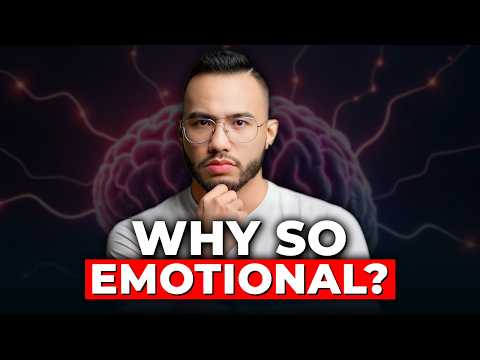
Watch: Emotions, Mood Swings, and CFS
What Makes Mood Swings Worse
Mood swings fluctuate in intensity. Some days the emotions are manageable. Other days you feel like you're at the mercy of whatever your body decides to throw at you. Understanding what triggers the worst episodes helps you make sense of the pattern.
Symptom flare-ups. When physical symptoms spike, emotional sensitivity spikes with them. They're connected. A bad symptom day almost always means a more emotional day because both are driven by the same nervous system activation.
Poor sleep. When you don't sleep well, your capacity to regulate emotions drops significantly. And with CFS, unrefreshing sleep is already common. Poor sleep and mood swings feed each other in a cycle.
Identifying with the emotions. There's a big difference between "I feel anxious" and "I am anxious." When you attach your identity to the emotional state, it becomes harder to let it pass. The emotion becomes a label instead of a wave.
Physical overexertion. Pushing beyond your current capacity triggers the stress response. That activation amplifies emotions along with physical symptoms. This is why you might feel emotionally stable all morning and then break down crying after an activity that pushed you too far.
Isolation. When no one around you understands what you're going through, the emotional load gets heavier. Feeling unseen or dismissed adds layers of frustration, sadness, and anger on top of the already amplified emotions.
What Actually Helps Mood Swings
Treating mood swings as a standalone emotional problem misses the root cause. The emotions aren't the problem. The nervous system state that's amplifying them is. When that state changes, the emotional swings naturally reduce.
That's the approach CFS Recovery takes. Instead of managing individual emotional episodes, you address the underlying nervous system dysregulation. As the stress response calms down, the emotional amplifier turns down with it. Emotions return to a proportional range.
One of the most important shifts is moving from "I am depressed" or "I am anxious" to "I'm experiencing feelings of depression" or "I'm experiencing feelings of anxiety." This isn't just wordplay. It's a genuine reframe that helps the brain separate identity from temporary emotional states. As Miguel explains, these emotions come and go like waves. They're not who you are. They're what your nervous system is producing right now.
Nervous system retraining is how people in our community have stabilized their emotions. As the nervous system learns that safety is the default instead of threat, emotional regulation naturally improves. Research on neuroplasticity and emotional regulation supports that the brain can develop new emotional response patterns through consistent practice.
This doesn't happen overnight. But it does happen. And for many people, the emotional stabilization is one of the most meaningful changes during recovery.
What our clients experience
We've got over 3,000 documented client wins across our community. Many of those specifically mention emotional stability returning. People who cried every day are now experiencing normal emotional ranges again. People who couldn't handle any stress without breaking down are now navigating challenges with calm.
This isn't theory. It's documented. You can hear these stories directly from the people who lived them on our recovery stories page.
Summary
Mood swings with CFS are caused by a nervous system stuck in survival mode that amplifies every emotional signal. Small triggers produce big reactions because the emotional amplifier is turned all the way up. The swings often correlate with symptom flare-ups and adjustment periods. They improve when the underlying nervous system pattern is addressed through retraining. As the stress response calms, emotional regulation returns to a normal range.
Sources and References
- Cvejic E, Birch RC, Vollmer-Conna U. "Cognitive-autonomic interactions and emotion regulation in chronic fatigue syndrome." Psychoneuroendocrinology. 2018. PubMed 30223028
- Arroll MA, Senior V. "Individuals' experience of chronic fatigue syndrome/myalgic encephalomyelitis: an interpretative phenomenological analysis." Psychology and Health. 2018. PubMed 29150072
- Thayer JF, Ahs F, Fredrikson M, et al. "A meta-analysis of heart rate variability and neuroimaging studies: implications for heart rate variability as a marker of stress and health." Neuroscience and Biobehavioral Reviews. 2012. PubMed 25783612
- Marin MF, Bhatt M, Bhatt M, et al. "Neuroplasticity-based approaches to anxiety disorders." Neuroscience and Biobehavioral Reviews. 2019. PubMed 31157856
Frequently Asked Questions About Mood Swings and CFS
CFS causes mood swings because the nervous system is stuck in a chronic stress response. When the body is in fight-or-flight mode, emotions become amplified and harder to regulate. Small triggers produce big emotional reactions because the nervous system is already running at maximum sensitivity.
Emotions like sadness, anger, frustration, and fear all get turned up to levels that feel out of proportion. It's the nervous system amplifying the signal, not a sign of emotional weakness.
Yes. Mood swings are an extremely common symptom of nervous system dysregulation. When your body is dealing with chronic illness and the stress response is constantly activated, emotional instability is a predictable result.
It doesn't mean something is psychologically wrong with you. It means your nervous system is overwhelmed, and your emotional regulation capacity is reduced as a result.
It can feel like you have no control, but it's not about willpower or forcing emotions to stop. The key is understanding that the emotional swings may be driven by the nervous system, not by personal weakness.
As you learn to respond to emotions as nervous system signals rather than emergencies, they gradually lose their intensity. Nervous system retraining helps build this capacity over time.
For most people, yes. The emotional instability that comes with CFS is a symptom of the underlying nervous system dysregulation. As the nervous system calms down through recovery, emotional regulation typically improves.
Thousands of people in the CFS Recovery community have reported that their emotions stabilized as their nervous system settled. It's one of the most commonly reported improvements.
CFS mood swings and depression can overlap, but they're not the same thing. CFS mood swings tend to be reactive and fluctuating, meaning emotions shift rapidly in response to symptoms, energy levels, and stressors. Depression tends to be more persistent and flat.
Many people with CFS experience both. If you're concerned about depression, that's a conversation worth having with your healthcare provider.
Crying easily is a common sign of a nervous system that's in overdrive. When the stress response is constantly activated, your emotional sensitivity is turned way up. Things that wouldn't normally make you cry can trigger strong emotional responses because the nervous system is amplifying everything.
It's not a sign of weakness. It may be a sign of an overwhelmed nervous system. As the nervous system calms down, the emotional sensitivity typically returns to a normal range.
Your Emotions Can Stabilize. The Swings Can Settle.
Thousands of people in our community have experienced their emotional roller coaster smoothing out as their nervous system calmed down. With coaching from people who've recovered themselves, you'll understand why it's happening and what to do about it.
Take the Free Self Assessment →