Depression With CFS: Why It Happens and How To Move Through It
You wake up and the first thought is: why did I wake up? Another day of being stuck. Another day of watching the world move while you stay still. You used to have plans, energy, a life that felt like yours. Now everything feels flat, heavy, and pointless.
Those feelings make complete sense. When your body is stuck in survival mode and your life has been stripped down to the basics, feelings of depression are a completely normal human response. Not a character flaw. Not a separate diagnosis to worry about.
You're not "depressed" as a permanent identity. Your nervous system is stuck, your situation is hard, and your emotions are reflecting that.
What You'll Learn On This Page
- Feelings of depression with CFS are incredibly common and completely understandable given your situation
- "Feelings of depression" is different from "I am depressed." One describes a temporary emotional state. The other becomes an identity
- Your nervous system drives your mood. When it's stuck in fight-or-flight, emotional lows are a predictable result
- These feelings come in waves, often tied to adjustment periods and physical symptom flare-ups
- As the nervous system calms down, mood improves. Thousands of people in our community have experienced this
What Depression With CFS Actually Feels Like
Feelings of depression affect an estimated 30-40% of people with ME/CFS, with some studies reporting rates as high as 50% depending on severity and duration of illness (Matcham et al., 2014). But the real number is likely higher, because many people don't report emotional symptoms when they're focused on the physical ones. Depression with CFS isn't always the heavy, clinical version you hear about. Sometimes it's subtler than that, and in some ways harder to name.
It can feel like emotional flatness. Like the color has been drained out of everything. You don't feel sad exactly. You just don't feel much of anything. Things that used to excite you, plans you used to look forward to, they don't register anymore.
Other times it's heavier. You wake up and your first thought is dread. Not because something bad happened, but because you're facing another day of the same thing: pain, fatigue, isolation, watching everyone else live while you're stuck.
The specifics vary, but the pattern is consistent:
- ● Feeling empty, flat, or emotionally numb
- ● Dreading the start of each day
- ● Loss of interest in things that used to matter
- ● Feeling hopeless about the future
- ● Isolation and withdrawal from people
- ● Dark thoughts about whether things will ever change
If that matches what you're going through, you're not weak. You're human. Put any person in your situation and they'd feel the same way.
Why Feelings of Depression Happen With CFS
Feelings of depression with CFS come from two directions at the same time. One is biological. The other is situational. Both are real, and they feed each other.
The nervous system connection
When your nervous system is stuck in a chronic stress response, it affects brain chemistry directly. The fight-or-flight state changes how your brain produces and processes mood-regulating neurotransmitters like serotonin and dopamine. Research published in Frontiers in Neurology has shown that autonomic nervous system dysfunction in ME/CFS correlates with mood disturbances. Your brain may not be malfunctioning. It could be responding to a system that's been in emergency mode for too long.
It's similar to a phone in low-power mode. When the battery is critically low, the phone shuts down non-essential features to preserve what's left. Your body does something similar. Emotions, motivation, pleasure: these all take energy. When the nervous system is channeling everything into survival, those "non-essential" emotional functions get dimmed.
The situational reality
On top of the biological component, the situation itself is genuinely difficult. If you can't work, can't socialize, can't drive, can't eat the foods you love, can't exercise, can't be independent, of course you're going to have strong emotional responses to that. That's not a disorder. That's a human being responding to a situation that would challenge anyone.
The nervous system gets stuck in survival mode
Chronic stress, illness, and physical decline push the nervous system into a sustained fight-or-flight state. Brain chemistry shifts to prioritize threat detection over emotional regulation.
Your life circumstances compound the effect
Loss of independence, social isolation, chronic pain, and an uncertain future all create a legitimate emotional burden. These aren't imagined problems. They're real.
Emotional distress feeds back into the nervous system
Feeling depressed increases stress. Increased stress keeps the nervous system activated. The more activated the nervous system stays, the lower your mood drops. The cycle reinforces itself.
The loop continues until the pattern is interrupted
Without understanding what's driving these feelings, many people get stuck in this cycle for months or years. Breaking it starts with understanding the mechanism.
This is also why feelings of depression tend to spike during adjustment periods. When your physical symptoms are flaring, your mood is more likely to dip. When symptoms settle, mood often lifts. That wave pattern is a strong clue that the depression may be connected to nervous system state rather than a fixed condition.
CFS Depression vs. Normal Sadness
Everyone feels down sometimes. A bad day, a disappointment, a loss. But the emotional experience of CFS is different from ordinary sadness. Here's how:
| Normal Sadness | CFS-Related Depression |
|---|---|
| Triggered by a specific event or loss | Can feel constant, without a clear single trigger |
| Lifts within days or weeks | Can persist for months, fluctuating with symptom cycles |
| You can still enjoy some things | Emotional flatness makes everything feel dull |
| Proportional to what happened | Can feel disproportionately heavy even on "good" symptom days |
| Talking about it or being around people helps | Social interaction is limited or exhausting |
| Sleep and rest help you bounce back | You wake up just as flat or worse, even after rest |
| You still feel like yourself | You feel disconnected from the person you used to be |
If the right column describes your experience, that's not weakness. It's a signal that your nervous system is involved, and that there's something driving these feelings beyond circumstance alone.
Watch: The Truth About Anxiety and Depression With CFS
In this video, Miguel gets honest about his own experience with feelings of anxiety and depression during CFS, why identifying with these labels can become limiting, and how these emotions shift as the nervous system starts to heal.
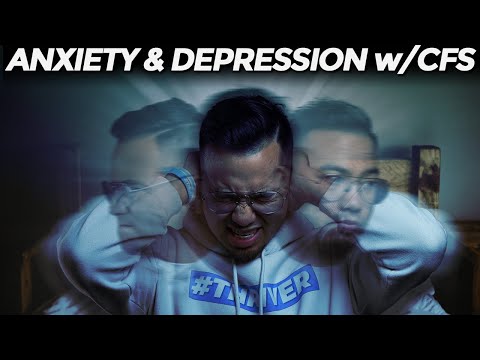
Watch: The Truth About Anxiety and Depression with CFS
The Identity Trap: Why Language Matters
This distinction might sound small, but it matters more than you think.
When you say "I am depressed," you're making depression part of your identity. It becomes who you are, not something you're experiencing. And when something is who you are, it's much harder to change. It feels permanent. It feels fixed.
When you say "I have feelings of depression," you're describing an emotional state. Feelings come and go. Waves come to shore and go back out. Emotions fluctuate. Even in the hardest parts of CFS, there are moments where you feel something different. Maybe a spark of curiosity. A brief window of calm. A few minutes where things feel lighter.
Those moments matter. They prove that depression isn't who you are. It's a state you're passing through.
Miguel has talked openly about this. Even after recovering, there are days where he feels flat, anxious, or uncertain. But the difference is he doesn't identify with it anymore. He sees it as temporary. And because his situation changed, because his nervous system healed, those waves are shorter, less intense, and further apart.
This applies to anxiety too. Emotions come in waves. Some weeks you'll feel heavier. Other weeks lighter. During adjustment periods, when symptoms are flaring, the emotional waves will be more intense. When symptoms settle, the emotions often settle with them. That fluctuation is proof that these feelings are connected to your nervous system state, not a permanent part of who you are.
What Actually Helps
Going after depression as a standalone problem doesn't address the root cause. If the nervous system is stuck and the situation hasn't changed, managing symptoms of depression in isolation only goes so far.
The approach that's worked for thousands of people in our community: address the underlying nervous system dysregulation. When the stress response calms down, brain chemistry starts to rebalance. Physical capacity returns. Independence comes back. Social connection becomes possible again. And the situational factors that were feeding the depression start to ease.
Nervous system retraining is how people in our community have moved through these feelings. It involves systematically teaching the nervous system that safety is the default instead of threat. As the stress response settles, mood naturally lifts. This aligns with growing research on neuroplasticity-based approaches that show the brain can form new patterns when given the right inputs consistently.
This doesn't mean you should ignore severe depression or avoid professional support. If you're in a dark place, reaching out to a mental health professional is important. Some people benefit from medication to take the edge off while they work on the underlying nervous system patterns. Miguel was on a mild SSRI and anti-anxiety medication during his most severe bedridden phase. It's not about choosing one path or the other. It's about using whatever supports your recovery.
What our clients experience
We've got over 3,000 documented client wins across our community. Many of those include improvements in mood, motivation, and emotional resilience alongside physical progress. When the nervous system calms down, the whole picture shifts: physical symptoms ease, and so does the emotional weight.
This isn't theory. It's documented. You can hear these stories directly from the people who lived them on our recovery stories page.
A real example: Jon's story
Jon spent years dealing with severe CFS, including intense feelings of depression, anxiety, and isolation. He couldn't work, couldn't socialize, and felt completely stuck. After working through the CFS Recovery system, his mood was one of the things that shifted most dramatically. He went from barely getting through the day to coaching others through the same journey. He now works as a coach at CFS Recovery. You can watch his full recovery story in his own words.
Summary
Feelings of depression with CFS are driven by nervous system dysregulation and the reality of living with a limiting condition. They're incredibly common and completely understandable. These feelings come in waves, often tied to adjustment periods and symptom flare-ups. Identifying with depression as a permanent identity can hold you back. When the nervous system calms down and life circumstances improve through recovery, mood naturally lifts. CFS Recovery has documented thousands of client wins where emotional health improved alongside physical progress. If you're struggling with severe depression, professional support is always recommended alongside this work.
Sources and References
- Matcham F, Rayner L, Steer S, Hotopf M. "The prevalence of depression in rheumatoid arthritis: a systematic review and meta-analysis." Rheumatology. 2014. PubMed 28160747
- Maksoud R, du Preez S, Eaton-Fitch N, et al. "A systematic review of neurological impairments in myalgic encephalomyelitis/chronic fatigue syndrome using neuroimaging techniques." PLoS One. 2020. PubMed 31728781
- Shan ZY, Finegan K, Bhuta S, et al. "Brain function characteristics of chronic fatigue syndrome: a task fMRI study." Frontiers in Neurology. 2020. PubMed 33002030
- Gulyaeva NV. "Neuroplasticity and recovery of function: molecular mechanisms and therapeutic approaches." Biochemistry (Moscow). 2022. PubMed 35164308
Frequently Asked Questions About Depression and CFS
Not always. Depression with CFS is often driven by nervous system dysregulation and the situation itself, rather than a standalone psychiatric condition. When you're stuck in bed, isolated, and in pain every day, feelings of depression are a natural human response.
For many people with CFS, these feelings improve significantly as the nervous system calms down and their physical capacity returns. However, if you're experiencing severe depression, always consult a qualified healthcare provider.
People with CFS feel depressed for several overlapping reasons. The nervous system is stuck in a chronic stress response, which directly affects mood-regulating brain chemistry. On top of that, the situation itself is difficult: loss of independence, isolation, inability to work or socialize, chronic pain, and watching life pass you by.
Both the biological and situational factors feed into each other, creating a cycle that persists until the underlying nervous system pattern is addressed.
Many people in our community have reported their mood improving as their nervous system settled down. When the stress response calms, brain chemistry starts to rebalance, physical capacity increases, and the situational factors that feed depression begin to ease.
Nervous system retraining addresses the root cause rather than treating depression as a separate issue. That said, severe depression may also benefit from professional support alongside this work.
That's a decision to make with your doctor. Some people with severe CFS have used medication to take the edge off while they work on nervous system retraining.
Miguel was on a mild SSRI and anti-anxiety medication during his most severe bedridden phase. Medication can provide a boost to help get the neuroplastic change started in extreme cases. It's not about choosing one path or the other. It's about doing what supports your recovery.
Yes. Feelings of depression with CFS tend to come in waves rather than being constant. They're closely tied to adjustment periods and physical symptom flare-ups. When your body is flaring, your mood is more likely to dip. When symptoms settle, mood often lifts.
This wave pattern is actually a clue that the depression is connected to the nervous system rather than being a fixed condition.
It's more common than most people realize. When you're stuck in bed, isolated, and in severe pain with no clear end in sight, dark thoughts can show up. Miguel has been open about experiencing these thoughts himself during his worst period.
The key is recognizing that these thoughts are driven by the situation, not by who you are. As circumstances improve through recovery, these thoughts tend to fade. If you're experiencing severe or persistent dark thoughts, please reach out to a mental health professional.
These Feelings Can Shift. Your Mood Can Come Back.
Thousands of people in our community have experienced their mood lifting as their nervous system calmed down. With coaching from people who've recovered themselves, you'll understand why you're feeling this way and what to do about it.
Take the Free Self Assessment →