How Crista Is Recovering From Long COVID and CFS
"Someone finally is understanding what I'm going through and they've got it figured out. That was just incredible."
Individual results vary. This is one person's experience and is not a guarantee of specific outcomes.
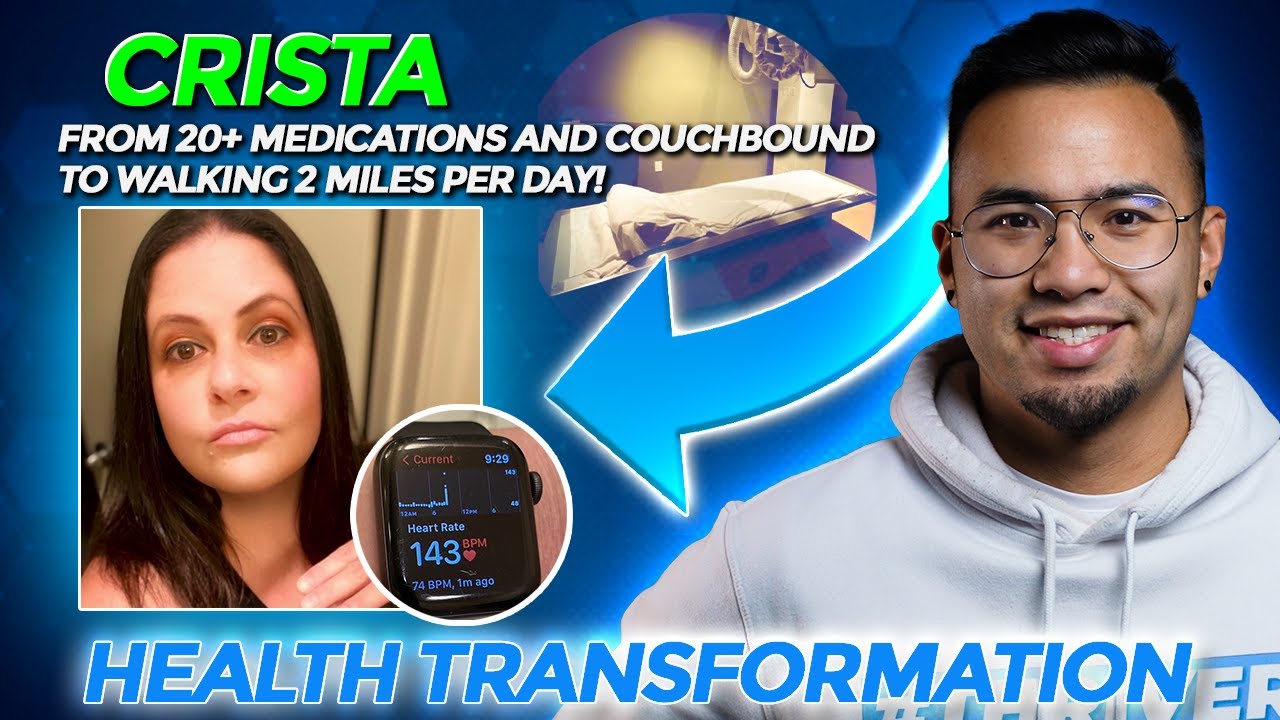
Watch Crista's full recovery interview with Miguel Bautista
Key Takeaways From Crista's Recovery
| Condition: | Long COVID (July 2020) progressing to ME/CFS diagnosis. Over 90% housebound for 2.5 years. |
| Treatments that failed: | 20+ specialists at UCLA, Cedars-Sinai and UCLA Long COVID clinics, functional medicine, 5 acupuncturists, 20+ medications and supplements. |
| What worked: | CFS Recovery's recovery system, built on nervous system retraining. Simple, brain-fog friendly content she could work through at her own pace. |
| Timeline: | Significant progress in just 86 days. From bedbound to hiking, from 20+ meds to mostly vitamins, from total brain fog to clear conversation. |
| Key insight: | As a physical therapist, Crista recognized the nervous system connection herself, but couldn't find anyone who knew how to address it until finding CFS Recovery. |
What Was Crista's Life Like Before Long COVID?
On the surface, Crista was the picture of health. She was a full-time physical therapist working 10 to 12 hour days at a fast-paced outpatient orthopedic office. The day before she got COVID symptoms, she came back from a 15-mile hike. She'd take 5 a.m. boot camp classes. She'd get up at 4:30 a.m. to do an hour and a half on her indoor cycling bike before a full work day.
But underneath it all, the stress had been building for a long time. She was spending 4 to 8 hours on weekends doing medical documentation. She wasn't sleeping. She was running on fumes, and her mental health was starting to suffer. She was a self-described perfectionist with a type-A personality, though she didn't recognize it at the time.
This pattern, the go-go-go lifestyle, the perfectionism, the chronic stress, is something we see all the time. The body can only handle so much before something gives. For Crista, COVID was the trigger that pushed her nervous system past its limit.
How Did Long COVID Hit Crista?
COVID hit Crista in July 2020. It didn't start the way she expected. There was no fever, no coughing. It hit her GI system first. She was driving and suddenly felt like she was going to be violently ill. From there, she spiraled into severe neurological symptoms almost immediately.
She tried to go back to work after the initial illness. Within a few days, she crashed harder than before. She came home and couldn't even make a phone call. She couldn't write her own name on disability paperwork. Her handwriting looked like someone who'd had a traumatic brain injury.
The brain fog was unlike anything imaginable
Crista's cognitive impairment went far beyond normal tiredness. She couldn't find simple words. She couldn't do basic tasks in the right order. She'd try to make a sandwich and couldn't figure out the steps. She'd find cleaning products in the refrigerator. She turned off the light switch when she meant to flush the toilet.
The fear made everything worse. She was terrified she had early onset dementia, multiple sclerosis, or Parkinson's. She was a healthcare professional who knew what these conditions looked like. When your own brain stops working, that knowledge becomes fuel for panic.
How Bad Did Crista's Symptoms Get?
At her worst, Crista was over 90% housebound. She would only leave the house for medical appointments or maybe a quick grocery run. The rest of the time she was in bed, in a dark room with blackout curtains, because she couldn't tolerate light or sound.
Her fatigue felt like her body was soaked in cement. She'd be lying on her side and couldn't even lift her phone. She didn't have the strength to stand long enough to heat up soup on the stove. Showering once a week was an accomplishment. She needed a shower chair and an extended hose arm because washing her hair was "an extreme sport."
Sensory overload controlled her life
The sensory sensitivities were brutal. She couldn't listen to music, watch movies, or even tolerate podcasts. Anything that touched her neck or ribcage felt like barbed wire against her skin. She had severe nerve pain, IBS, abdominal pain, nausea, and tremors in her hands whenever she tried to pick something up.
Her heart rate would swing wildly, dropping into the 40s and then spiking to 210. Her blood pressure did the same. 143 beats per minute just from brushing her teeth with an electric toothbrush. She was barely existing, not living.
What Treatments Did Crista Try?
Crista went through the medical system more thoroughly than most. At UCLA alone, she saw over 20 different specialists. That's not counting her functional medicine doctor, five acupuncturists, four physical therapists, or her own expertise as a PT.
She got into not one, but two Long COVID clinics: Cedars-Sinai and UCLA. At Cedars-Sinai, they told her that her heart was "literally perfect." They couldn't explain why it was racing to 143 bpm while she brushed her teeth. At UCLA's Long COVID clinic, the main prescription they gave her was Claritin. An over-the-counter allergy medicine.
20+ medications and supplements
At her peak, Crista was taking 20+ medications and supplements. SSRI injectables for severe migraines, inhalers, and a long list of other prescriptions. None of them addressed the root cause. They managed symptoms, sometimes. But she wasn't getting better.
One rheumatologist finally diagnosed her with ME/CFS. But even that came with nothing useful. No mention of brain retraining. No resources. Just the diagnosis and a vague encouragement to be "mentally tough."
How Did Crista Find Nervous System Retraining?
As a physical therapist, Crista had a unique advantage. She identified early on that her symptoms pointed to nervous system dysfunction. The wild heart rate variability, the blood pressure swings, the sensory overload. None of it made sense as a simple organ problem. Her heart was perfect. Her brain scans were fine. The dysfunction was in how her nervous system was processing everything.
But knowing the problem and knowing how to fix it are two different things. She tried to rehab herself twice and ended up in massive crashes. No one in the medical system could tell her how to actually retrain a hypersensitive nervous system. Then she found CFS Recovery's YouTube videos.
Why this program was different
What drew Crista in was how the information was delivered. She'd been drowning in complex neuroscience research for years, but none of it was usable. CFS Recovery's approach took those complex concepts and simplified them into short, brain-fog friendly content she could actually process on her worst days.
The pre-recorded modules were short enough to watch during brain fog. She could go back and rewatch them. No rigid schedule. No pressure. And Miguel's book was the first book she'd been able to read in two and a half years. Double spaced, bigger font, simplified content designed for people in the thick of this illness.
What Changed in 86 Days?
Crista had been in the program for exactly 86 days at the time of her interview. Not even three months. The changes were already significant.
Before vs. after: Crista's recovery progress
| Area | Before Recovery | After 86 Days |
|---|---|---|
| Activity level | 90%+ housebound, bedbound | Going on hikes |
| Cognitive function | Couldn't order at a drive-thru | Clear 30+ minute interview |
| Showering | Once a week with shower chair | Regular showers independently |
| Medications | 20+ meds and supplements | Mostly vitamins, inhalers, OTC |
| Physical capacity | Couldn't lift her phone | Hiking again |
| Reading ability | Couldn't read for 2.5 years | Read Miguel's book cover to cover |
Three months earlier, there was no way she could have done this interview. She couldn't even order at a drive-thru. She couldn't retain what she wanted to order long enough to say it out loud. Now she was having a clear, detailed conversation for over 30 minutes about her entire medical history.
The group calls were a game changer
Beyond the training itself, the community aspect played a huge role. Crista had been socially isolated for years. Being in a group of people who understood what she was going through, without having to explain or prove herself, was healing on its own.
And there's real science behind that. Social isolation causes measurable changes in brain structure, including reduction in gray matter. Coming out of isolation and connecting with people who understand isn't just nice. It's part of the neuroscience of recovery.
What Makes Crista's Story Stand Out?
Crista isn't just someone who got sick and found a program. She's a physical therapist with a doctorate who went through the medical system more thoroughly than most people ever will. She saw 20+ specialists. She got into two of the most reputable Long COVID clinics in the country. She tried functional medicine, acupuncture, and over 20 medications.
And after all of that, the thing that moved the needle was nervous system retraining. Not a new medication. Not a new supplement stack. A coaching program that taught her how to work with her nervous system instead of fighting against it.
Her progress in 86 days was more significant than anything she'd achieved in the previous 2.5 years of trying everything else. That's the pattern we see with thousands of our clients. The nervous system approach works because it may address the underlying pattern, not just the symptoms.
Crista's story is one of over 100+ hours of filmed recovery case studies from real people sharing real experiences. No scripts. No actors. Just people who've been where you are and found their way through it.
Crista's 1-Year Update: 18 Km Hikes and Coaching Others
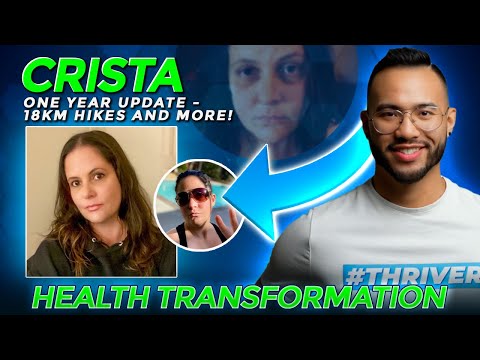
Watch Crista's recovery update interview
One year after her recovery, Crista came back for a follow-up that shows just how far nervous system retraining can take you. The physical therapist who couldn't stand up to shower independently is now doing 18 km hikes.
But what's even more remarkable is what happened next. Crista became one of CFS Recovery's Thriver coaches, guiding others through the same recovery system that saved her. She went from being 90% housebound to leading coaching calls and helping clients find their own breakthroughs.
When she joined the program, she couldn't even stand up and shower independently. Now she's hiking 18 kilometers and coaching others through their recovery. That's the kind of transformation that happens when the nervous system finally gets unstuck.