Hopeless and Turned Away by Doctors to Intense Workouts
"Currently I'm lifting three or four days a week, quite heavy. I'm squatting, benching, I'm deadlifting. It's very crazy to see the rate at which I've progressed."
Individual results vary. This is one person's experience and is not a guarantee of specific outcomes.
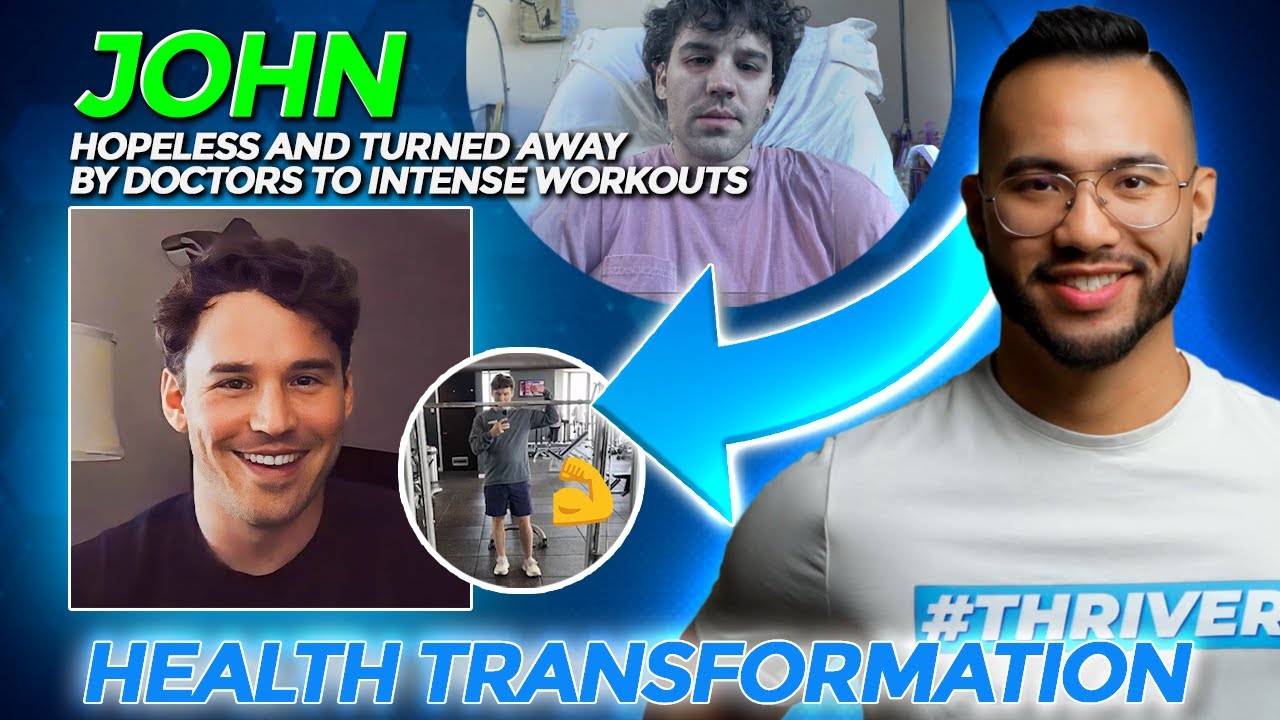
Watch John's full recovery interview
Key Takeaways From John's Recovery
| Condition: | Long COVID and CFS triggered by a vaccine injury in May 2021 followed by COVID in December 2021. Moderate severity, functional but highly symptomatic. |
| Doctors that failed him: | Primary care said "just getting older" at age 27. Rheumatologist found nothing. Northwestern Long COVID clinic had no answers. Misdiagnosed with Lyme disease. |
| What worked: | CFS Recovery's recovery system, built on nervous system retraining with structured coaching and guided exercise progression. |
| Timeline: | From 10 assisted push-ups causing 3-5 day flare-ups to deadlifting 275 lbs in 4.5 months. |
| Now: | Lifting heavy 3-4 days per week. Bench pressing 185 lbs, squatting 225 lbs, deadlifting 275 lbs. Calmer, more resilient, and back to living his life. |
What Caused John's Long COVID and Chronic Fatigue Syndrome?
Before getting sick, John was a 27-year-old in Chicago living life at full speed. High-stress job with late nights. Heavy workouts. He was burning the candle at both ends for about a year. His body was already running on fumes.
Then in May 2021, something shifted. He started getting sick every other week with flu-like symptoms. He wasn't recovering well from workouts or stressful days. Looking back, that was the moment things started to change. Six months later, in December 2021, he caught COVID. And even though the acute infection wasn't severe, it was the tipping point.
The post-COVID crash pattern
After recovering from the initial COVID infection, John tried to go right back to his normal life. That's when it all fell apart. He'd push through a workout and get hit with five-day flare-ups with his heart racing and flu-like symptoms that wouldn't go away. This is the classic post-exertional malaise pattern we see in Long COVID and CFS. The nervous system may get stuck in a protective mode and can't regulate itself.
What Did Doctors Tell John About His Symptoms?
John went through the same merry-go-round of doctors and specialists that so many people with these conditions experience. His primary doctor told him his symptoms were "just part of getting older." He was 27.
The Long COVID clinic that had no answers
After his primary doctor and a rheumatologist both came up empty, John waited three months for a spot at the Northwestern University Long COVID clinic in Chicago. He thought this would be the light at the end of the tunnel. These specialists were supposed to understand what he was going through.
Instead, the doctor looked at him like he was making it up. Because John didn't have shortness of breath or the more visible symptoms, the specialist said he'd never heard of post-exertional malaise. His only response was essentially: good luck.
The Lyme disease misdiagnosis
John was also diagnosed with Lyme disease based on blood tests and put on two months of antibiotics. His hopes went sky-high. He thought he'd finally found the answer. But the antibiotics did nothing. The doctor's response? "I think you might just be sick for the rest of your life like this."
That was the emotional rock bottom. Not because his symptoms were at their worst physically, but because he'd completely lost all hope. The cycle of getting his hopes up and having them crushed was more exhausting than the illness itself.
How Did John Find CFS Recovery's Program?
John switched from Googling "long COVID" (which led to endless rabbit holes and fearmongering) to searching YouTube for Long COVID recovery stories. That's when he found CFS Recovery's content and Raelan Eagle's work around the same time.
Reading Raelan's book was a turning point. She'd gone through the exact same sequence of events: the Lyme disease misdiagnosis, the same symptoms, the same hopelessness. That's when John connected the dots. Long COVID was actually chronic fatigue syndrome, and it was a nervous system problem, not a structural one.
Why coaching made the difference
John had already done a lot of recovering on his own through YouTube content and self-study. When he joined CFS Recovery, he was roughly 80% recovered. But he was stuck. He needed specific structure, a clear roadmap, and someone to tell him when it was safe to push harder and when to pull back.
The program gave him three things that changed everything. First, the mindset foundation. Understanding that symptoms are driven by emotions and a dysregulated nervous system, not structural damage. Second, the polyvagal theory education. Seeing where his symptoms fit on the autonomic nervous system triangle made everything click. And third, having a coach available five days a week to guide his exercise progression.
How Quickly Did John's Recovery Progress?
When John started the program about 4.5 months ago, he could do 10 assisted push-ups (off a counter, not even full push-ups) and 10 bodyweight squats. That alone would trigger a 3-5 day flare-up with flu-like symptoms.
Before vs. after: John's recovery by the numbers
| Metric | Before Recovery | After 4.5 Months |
|---|---|---|
| Push-ups | 10 assisted (off a counter) | Full push-ups, multiple sets |
| Deadlift | None possible | 275 lbs (2x2) |
| Bench press | None possible | 185 lbs (sets of 6) |
| Squat | 10 bodyweight squats | 225 lbs |
| Workout frequency | Any exercise caused 3-5 day flare-ups | 3-4 days per week, heavy lifting |
| Post-workout recovery | Flu-like symptoms for days | Normal soreness, occasional short nap |
That's going from 10 assisted push-ups with multi-day crashes to bench pressing his own body weight, squatting two plates, and pulling almost 300 lbs off the floor. Multiple days a week. With minimal symptoms afterward.
What Made the Biggest Difference in John's Recovery?
John pointed to three major shifts that moved the needle more than anything else.
1. Understanding the mind-body connection
The program starts with mindset before getting into the physical side of recovery. John said this was "the best possible thing to do" because it reframed everything. The symptoms aren't random. They're not dangerous. They're signals from a nervous system that thinks the world is dangerous. Once he understood that, the fear started to lose its power.
2. The polyvagal theory framework
Seeing where his symptoms fit on the autonomic nervous system triangle was a massive light bulb moment. The tremors he was getting at night, the flu-like episodes, the anxiety, it all mapped to specific states of nervous system activation. It wasn't a mystery anymore. There was logic behind it.
3. Having a coach in your back pocket
The coaching support was what gave John the confidence to keep pushing his limits safely. When he wondered whether he could add a second workout, his coach removed the fear. Not by telling him to go run a marathon, but by confirming he was ready for the next step. It's like having a personal trainer who understands the nervous system. They tell you when to push and when to build up gradually.
4. Learning to create safety during adjustment periods
John specifically credited a video from Coach Junior about reminding yourself you're safe during adjustment periods. Instead of reacting to symptoms with fear (which amplifies them), he learned to soothe his nervous system back to a baseline of safety. That's neuroplasticity in action: replacing the fear response with feelings of safety and self-compassion.
The Bigger Wins Beyond the Weight Room
The physical progress is impressive, but John says the mental wins are just as significant. His awareness level changed completely. He can now recognize when external stress is pushing him toward fight-or-flight and bring himself back to baseline. Before the program, his stress levels were easily overwhelmed by everyday life.
He also developed a deeper appreciation for simple things. Going for a walk outside feels different now. He notices beauty and tunes into his senses in ways he never did before. Stopping and smelling the roses, as he put it. That's a sign of a nervous system that's no longer stuck in survival mode.
John's Advice for Anyone Feeling Hopeless Right Now
John had a clear message for people watching his story who are where he was a year ago: feeling hopeless, cycling through doctors who have no answers, wondering if they'll ever feel normal again.
His advice was simple. There may not be a magic pill for this, but recovery is possible. He recommended finding solution-focused resources from people who've actually recovered, rather than getting lost in forums of people who haven't. And while you can make progress on your own through YouTube videos and self-study, having structured coaching accelerates everything.
He also suggested coming at recovery from multiple angles. Books, videos, coaches, and community all reinforce the core understanding that your nervous system may be stuck rather than broken, and it can be retrained.