Bedridden and Unable to Walk to Walking 4 Miles at 66
"I gave myself the gift of your program, Miguel. It's made all the difference. All the difference in my life."
Individual results vary. This is one person's experience and is not a guarantee of specific outcomes.
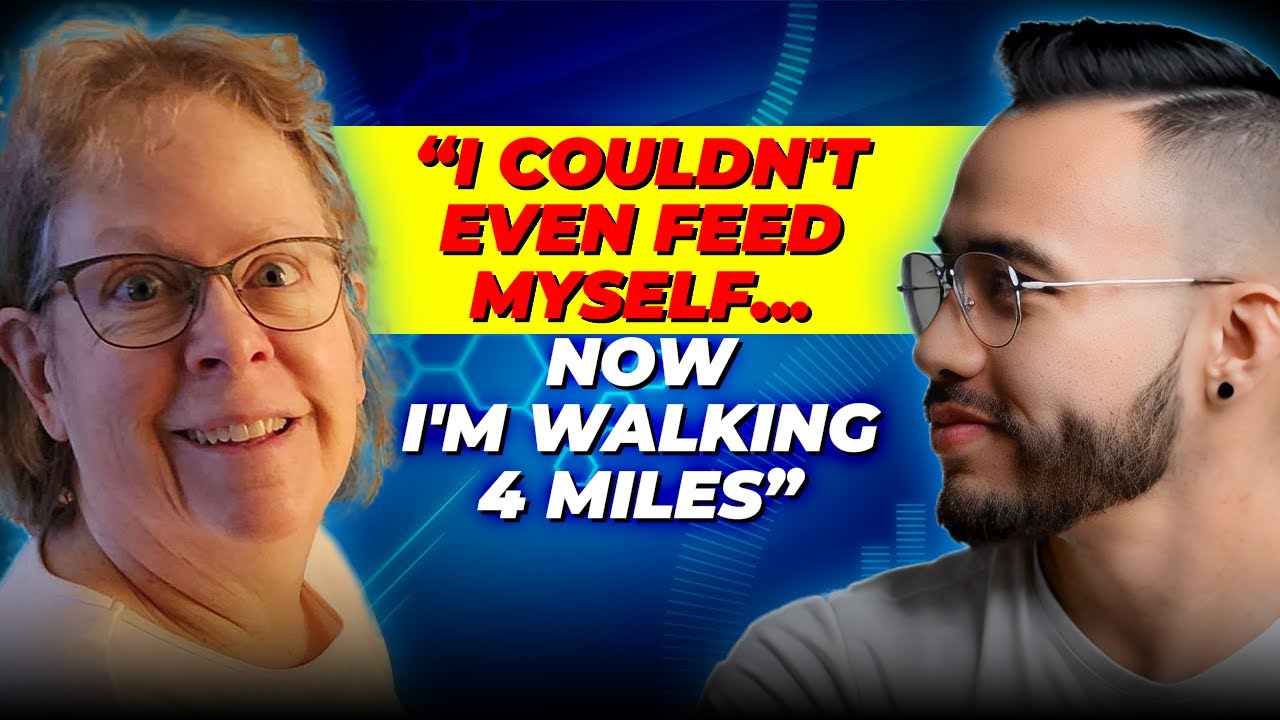
Watch Karen's full recovery interview
Key Takeaways From Karen's Recovery
| Condition: | Post-COVID chronic fatigue syndrome. Completely bedridden by May 2023 after contracting COVID in January 2023. |
| Treatments that failed: | Multiple doctors, IBS supplements, different diets, ~20 different pills, functional medicine clinic. Doctor told her to just "get up and lift weights." |
| What worked: | CFS Recovery's recovery system, built on nervous system retraining, gradual progress tracking, positive affirmations, forward thinking, and team support. |
| Timeline: | Completely bedridden to walking up to 4 miles at a time in 7-8 months. |
| Now: | Walking miles in the forest, riding her e-bike, playing accordion for 2 hours, planning RV trips to Utah and Europe. |
What Caused Karen's Chronic Fatigue Syndrome?
Karen's CFS was triggered by COVID-19 in January 2023, combined with severe emotional and physical stress. She'd been traveling, and then her brother became very ill. She flew out to take care of him, pushing herself through declining energy and worsening health. She kept going and going, wondering why she felt so drained.
The push-crash pattern that took her down
By spring 2023, Karen's energy had been dropping for months. She saw several doctors for different possible causes. Nobody could find anything. She looked perfectly fine on paper. Yet her energy kept falling until she was completely bedbound by May. This is the classic pattern of post-viral fatigue: a viral trigger combines with ongoing stress, and the nervous system gets stuck in overdrive.
How Bad Did Karen's CFS Symptoms Get?
At her worst, Karen was completely bedridden, unable to feed herself, unable to sit up, and unable to shower. Her husband was doing everything for her. They were about to hire a caregiver just to help with meals and bathing. She couldn't even tolerate the stimulation of a Zoom call. The screen was too bright. The sound was too much.
Symptoms Karen experienced
- Severe fatigue
- Nausea
- Dizziness
- Rapid heart rate
- Light sensitivity
- Sound sensitivity
- Unable to sit up
- Unable to feed herself
- IBS flare-ups
- Severe weight loss
- Cognitive overload
- Depression
The darkest point
Karen was open about just how low she got. She was making "exit strategies." She was that far down. But she was too weak to act on any of them. And she's grateful for that. This is the reality for many people dealing with severe CFS. The combination of physical suffering and feeling trapped in a body that won't cooperate can take someone to an incredibly dark place.
What Treatments Did Karen Try Before CFS Recovery?
Karen went through the typical medical merry-go-round that so many people with CFS experience. She saw multiple doctors and specialists who couldn't figure out what was wrong. She tried IBS treatments, different diets, a functional medicine clinic in Seattle, a specialist in Bellevue, and ended up on about 20 different supplement pills. Nothing worked.
When the doctors don't understand
Her primary care physician told her to just get up and move around. Start lifting weights. Get out of bed and start walking. He didn't understand that Karen physically couldn't do that. Most doctors don't receive training on CFS or how the nervous system gets stuck. As Karen put it, there's a lot of discouragement when the people you trust with your health don't have answers.
How Did Karen Find CFS Recovery's Program?
Karen had been bedridden since May 2023. In July, she went on YouTube for something completely unrelated. One of Miguel's videos just happened to pop up in her feed. She started watching the free content and immediately recognized that the explanation made sense. It all connected to the vagus nerve and the early parts of the brain.
Giving herself the gift of recovery
Karen made herself "the gift" of joining the program on her birthday in the summer of 2023. She told herself: "I'm going to get my life back. I don't care what it takes." She was 65 at the time, and part of her worried she'd be too old for the program. That the team might cherry-pick only young, healthy people with the best chances. But she decided her life was still worth fighting for.
How Did Karen's Recovery Progress?
Karen's recovery didn't happen overnight. She was honest about how rough the start was. About four to five weeks into the program, she was still in a thick flare-up. She called Miguel and asked, "Do you really think I can recover?" The Zoom calls were almost too much stimulation. She'd have to lie down, lean against her headboard, and glance at the screen with the brightness turned down and the blinds closed.
Before vs. after: Karen's recovery by the numbers
| Metric | Before Recovery | After 7-8 Months |
|---|---|---|
| Mobility | Completely bedridden | Walking up to 4 miles |
| Self-care | Unable to shower or feed herself | Fully independent |
| Exercise | Couldn't sit up in bed | Riding e-bike, hiking in forests |
| Music | Couldn't reach the piano | Playing accordion for 2 hours at sessions |
| Social life | Isolated in bedroom | Attending music sessions, dining with husband |
| Caregiver needs | About to hire full-time caregiver | Fully independent, planning travel |
The small wins that built momentum
Karen tracked her progress in small steps. Getting to the bathroom twice a day. Then four times. Then enough steps to reach her piano. Then walking to the dinner table to eat with her husband. She celebrated each small victory. Walking down the stairs. Walking her first mile. Walking in the forest lands near her home in the Pacific Northwest.
She didn't just leap out of bed and start running around. She climbed slowly. Step by step. And she gave herself rest when she needed it. She was being kinder to herself than she'd ever been, and that made a real difference.
What Helped Karen Recover the Most?
Karen pointed to several things that moved the needle the most during her recovery. The combination of these elements, not any single one, is what created her transformation.
Affirmations and self-belief
Karen repeated the same words to herself every day, even when she didn't believe them: "I am brave, I am strong, and I am recovering." She wrote "I will not give up on myself" on a piece of paper and stuck it on her lampshade. Any time anxiety rose, she pulled those words up. She said them several times a day while still in bed, and she still uses them when anxiety shows up.
Forward thinking
Karen was always thinking about what she wanted to achieve next. Once she could shower, she wanted to stand in the kitchen. Once she could walk in the house, she looked out the window and said, "I'm going to make it to that hiking spot." She never stopped planning the next step. She never looked backward. She didn't care about what happened in the past. She focused on what was ahead.
Coaching and team support
The coaches and her teammates played a massive role. Working closely with coach Crista made a big difference because Crista helped Karen know when to push gently and when to hold back. Seeing her teammates improve gave her hope. And she made a key decision early on: she wouldn't compare herself to anyone else. Her journey was her own.
Creativity as a recovery tool
For Karen, tapping into creative activities was a major part of recovery. Playing piano, doing arts and crafts, reading books, writing detailed stories about the life she wanted to live. She wrote a story about a picnic on the beach that she's planning to live out. Creativity gave her nervous system something positive to focus on instead of fear and symptoms.
Can You Recover From CFS at 66 Years Old?
Karen's story answers this question directly. She was 66 years old, completely bedridden, unable to feed herself, and considering the worst. Eight months later, she's walking up to 4 miles at a time, riding her e-bike, playing accordion for 2 hours at Irish music sessions, and planning RV trips to Utah and a trip to Europe.
She initially worried she'd be too old for the program. She thought the team might only accept younger people with better chances. But age wasn't the barrier she feared. As Karen put it: "I really believe that what's taught in this program and the support you receive can help anyone."
CFS Recovery has worked with people as young as 9 and as old as 86. The nervous system is a nervous system. The principles work regardless of age. Karen's story is one of over 70+ documented recovery interviews from people across 20+ conditions who've been through the program.
Karen's Recovery Wins
Your Recovery Story Could Be Next
Karen was 66, completely bedridden, and thought she was too old to recover. Every person on our Recovery Stories page once felt exactly like you do now. Exhausted. Skeptical. Wondering if recovery was even possible.