Wheelchair-Bound to Walking Through Snow in the Swiss Alps
"It's like a party for me. I feel life again. The endorphins were jumping inside my blood."
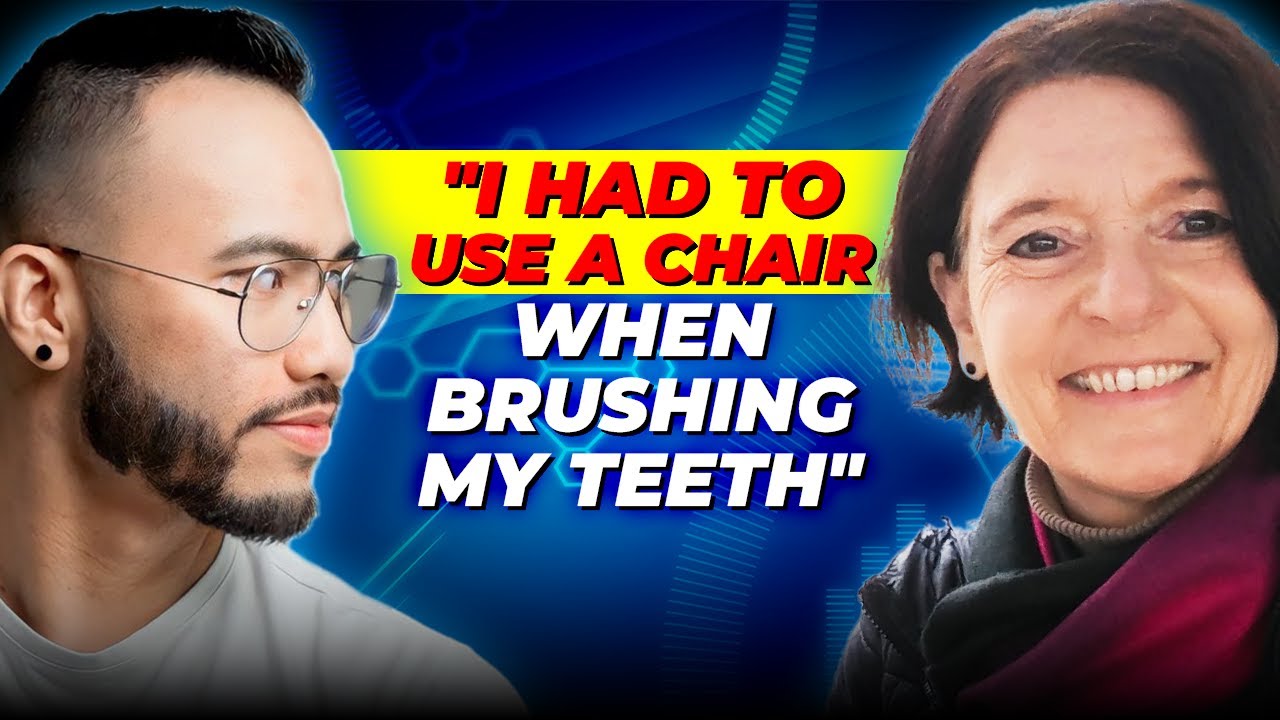
Watch Susanne's full recovery interview
Key Takeaways From Susanne's Recovery
| Condition: | CFS triggered by Epstein-Barr virus in 2005. Housebound and wheelchair-dependent for 17 years. |
| Treatments that failed: | Supplements, psychotherapy, traditional Chinese medicine, homeopathy, acupuncture, blood therapy, pacing, and a psychosomatic rehab clinic. |
| What worked: | CFS Recovery's nervous system retraining program with group coaching and 1-on-1 support. |
| Timeline: | Wheelchair-bound to walking independently within weeks. Walking 2km and hiking through snow within 5 months. |
| Now: | Walking daily, traveling solo to Switzerland, active with grandchildren, playing piano, and building "Susanne 3.0." |
What Caused Susanne's Chronic Fatigue Syndrome?
Susanne's CFS started in 2005 with an Epstein-Barr virus infection. Her family had a cold, but she only got a sore throat. Three days later, her entire body became incredibly heavy. She felt as though there was lead metal in her arms and legs. There was a strong pressure on her head and pain in her facial bones.
The slow progression over 17 years
Her doctor told her it was nothing to worry about. "It's only a virus. You're busy working. Relax and wait." She spent eight weeks lying down, using a landline phone from her bed to stay in contact with her team and clients. After those eight weeks, everything went back to normal.
But from that point on, every time her family caught a cold or flu, Susanne only got a sore throat, followed by the same crushing heaviness three days later. This happened about four times a year for five years. She assumed it was a weak immune system and tried everything to boost it. Good food, supplements, all of it. Nothing worked. By 2010, the episodes were coming every month, lasting a full week, with no connection to her menstrual cycle.
How Bad Did Susanne's Symptoms Get?
By 2018, Susanne's condition had escalated to the point where she stopped working completely. Before that, she needed someone to drive her to clients. She needed an assistant to help with flip charts and materials so she could sit and talk. She was taking painkillers and drinking black tea constantly just to stay upright.
The wheelchair and a chair to brush her teeth
By 2020, symptoms were coming every week. Seven days of symptoms, then a few "good" days where she tried to be extremely careful. She couldn't walk more than a few steps in her house. She got an electronic wheelchair so she could go on walks with her family. Her husband Thomas drove her everywhere. Every 20 minutes during car trips, they'd stop so she could lie down completely flat.
She needed a chair at the bathroom sink just to brush her teeth. She couldn't sit upright without getting dizzy. She couldn't hold her head up. She couldn't walk to the kitchen without risking a fall. For years, her life was the couch, the bed, and nothing else.
- Severe weakness
- Dizziness
- Facial bone pressure
- Diffuse headaches
- Restless legs
- Insomnia
- Inability to sit upright
- Exercise intolerance
- Post-exertional crashes
- Back pain
What Treatments Did Susanne Try Before CFS Recovery?
Over 17 years, Susanne tried nearly everything available. She went to general doctors, internists, and neurologists. They all told her the same thing: "Everything's fine with you." Then they suggested it might be a hidden depression or a somatic depression.
The cycle of misdiagnosis
One doctor she trusted recommended psychotherapy. But Susanne knew she didn't have depression. She was motivated, happy, mentally healthy. When her doctors recommended a psychosomatic rehab clinic, she went in 2015. They treated her as if she had a job burnout. She spent five weeks convincing them she was mentally healthy. The clinic director eventually confirmed it in writing.
In 2019, she received a diagnosis of a severe special form of migraine. The medication had such strong side effects she couldn't continue it. Finally, she was referred to the Chronic Fatigue Center at Charite in Berlin, Germany's leading authority on CFS.
Pacing: three years of rigid rules that didn't work
After the CFS diagnosis, the clinic recommended pacing to "keep the status quo." Susanne found the baseline concept, which required her to keep her energy level stable for 14 days before increasing activity. If she crashed before day 14, she had to start over.
She followed this protocol rigidly for three years. Every time she crashed, she felt guilty. "Did I watch 10 minutes too long of TV? Was the call with my friend too intense?" Each time symptoms returned, she felt like things were getting worse, not better. The rigid structure kept her stuck rather than helping her move forward.
How Did Susanne Discover CFS Recovery?
In early 2023, Susanne noticed more CFS recovery stories and brain retraining programs appearing online. She found Miguel's YouTube channel and the explanations made sense to her, but watching videos alone wasn't enough to make real change.
The book that started the first mind shift
A friend named Felicitas, who she'd met at a CFS clinic, joined CFS Recovery's program and told Susanne about nervous system retraining. Susanne got more curious. In September, she bought Miguel's book, and that's when things clicked.
She researched multiple programs. Felicitas had checked 20 different options and recommended CFS Recovery because of the close 1-on-1 coaching support and small group format. Susanne did a free training, met the coaches, and scheduled a call with Miguel.
How Quickly Did Susanne's Recovery Progress?
Within the first few weeks of starting, Susanne had her biggest breakthrough. Her coaches, Junior and Crista, told her group to forget everything they'd learned before about CFS. They said she would start increasing activity only when she was 100% convinced she would recover.
The exercises that rewired her thinking
The first exercise changed everything. She wrote down all her negative thoughts about the past, present, and future, then reframed them into positive statements. She found it so powerful that she recorded her reframed statements as affirmations and listened to them every single day from November onward. She created a vision board, wrote vision stories about small goals like walking with her husband and having longer talks with her father.
The elevator that changed everything
The real turning point came in Switzerland. She was visiting her grandchildren, and her husband Thomas was waiting downstairs with the kids and the wheelchair. The elevator wouldn't come. She was alone on the fifth floor with no phone.
So she started walking. Step by step, with wobbly knees, she made it down five flights of stairs. She nearly collapsed into the wheelchair at the bottom. Thomas said, "What are you doing?" She told him, "You have to be proud of me. I walked down on my own for the first time in years."
That moment broke the fear. Before, she wouldn't walk anywhere unless she knew there was a chair nearby. After that day, the fear of walking was gone.
Before vs. after: Susanne's recovery by the numbers
| Metric | Before Program | After 5 Months |
|---|---|---|
| Mobility | Wheelchair-dependent | Walking 2km independently |
| Daily activity | Couch to bed only | Walking daily, hiking in snow |
| Standing tolerance | Needed chair to brush teeth | Sitting and standing upright |
| Independence | Husband drove her everywhere | Solo trips to Switzerland |
| Family participation | Watched from wheelchair | Active walks and play with grandchildren |
| Fear of movement | Afraid to walk without a chair nearby | Walking through snow in the Alps |
What Were Susanne's Biggest Wins?
After that elevator breakthrough, Susanne started walking 5 minutes a day on her patio. She began sitting upright at the lunch table. Christmas came, and she tried a little bit of everything: baking cookies, playing piano, playing with the grandchildren, helping in the kitchen. She had ten good days over Christmas. That was another confirmation: it works.
Walking 800 meters up a hill on New Year's Eve
On New Year's Eve, Susanne went to a church where a friend played the organ. Afterward, her husband suggested walking up a hill to see the lights over Munich. They walked about 400 meters, stopped at a bar for a drink, then continued. She had terrible back pain because her muscles were so deconditioned. But she made it. 800 meters total, uphill.
Hiking alone through the Swiss snow
In January, Susanne traveled to Switzerland, to the mountains, on her own. She stayed in an apartment and went for walks through the snow every day. Walking in snow is harder than walking on flat ground. She was proud of herself. In February, she completed a long family walk of almost 2 kilometers.
Where Is Susanne Now?
Susanne describes herself as creating "Susanne 3.0." She doesn't want to be the overworked businesswoman she was before getting sick. And she doesn't want to be the version of herself that was trapped on the couch. She's building something new.
She's walking daily. She's playing piano again. She's spending quality time with her three grandchildren. She's working half-time with a mentorship program she loves. She's more present, more mindful, and more relaxed than she's ever been. Her biggest remaining goal is to travel independently by train and car without depending on Thomas to drive her.
Her story is one of over 70+ documented recovery interviews from people across 20+ conditions who've gone through CFS Recovery's programs. We've helped people who've been dealing with this for 3 months to 50 years. Susanne had it for 17. And she turned it around.
Susanne's Recovery Wins
Your Recovery Story Could Be Next
Susanne spent 17 years trying everything. She was told by Germany's top CFS specialist that recovery wasn't possible. Every person on our Recovery Stories page once felt exactly like you do now. Exhausted. Skeptical. Wondering if things could ever change.