Chest Pain With CFS: Why It Feels Like a Heart Attack
A sharp, shooting pain in your chest. A tightness that won't let up. Maybe a strange tingling running down your left arm. You've been to the ER. You've had the scans, the monitors, the blood work. They keep telling you nothing is wrong. But the pain keeps coming back, and every time it does, part of you wonders if this is the one that's real.
If your cardiac tests are clear and the pain still shows up, there's an explanation for what's happening. And it starts with your nervous system, not your heart.
If your tests have come back clear, your nervous system may be stuck in protection mode, using pain to keep you still.
What You'll Learn On This Page
- CFS chest pain is often a nervous system symptom rather than a sign of heart disease (once cardiac issues have been ruled out)
- Chronic pain is processed in the brain, not in the body. The pain is real, but the source is neurological
- Your brain uses chest pain as a limiter to keep you still when it perceives you've crossed the stress threshold
- Fear and anxiety about the pain create a feedback loop that makes the symptom worse over time
- Chest pain can resolve. People in our community have reported it improving as their nervous system calmed down
What Does CFS Chest Pain Feel Like?
Chest pain in CFS can include sharp shooting sensations, pressure or tightness, aching, and tingling that radiates down the arm. Research shows that up to 53% of people with ME/CFS report chest pain or chest discomfort (Naschitz et al., 2008). Non-cardiac chest pain is also commonly reported in long COVID and fibromyalgia. It's one of the most frightening CFS symptoms because it so closely mimics a heart attack.
Most people with this symptom describe a similar pattern:
- ● Sharp, sudden pain in the chest that comes and goes
- ● Tightness or pressure across the chest area
- ● Tingling or numbness radiating down the left arm
- ● Pain triggered by physical activity, like climbing stairs or walking
- ● Pain that shows up randomly, even at rest
- ● Episodes that feel identical to a heart attack but all tests come back clear
You might be sitting still, reach for a glass of water, and suddenly feel a sharp stab in your chest. Or it might hit when you stand up, climb a few stairs, or try to go for a walk. The pattern can feel random, which makes it even scarier.
Why Chest Pain Happens With CFS
Chest pain in CFS makes complete sense once you understand what the nervous system is doing.
When your body crosses its stress threshold, the nervous system does everything it can to keep you still. It puts you in freeze mode or extreme fight-or-flight. And one of the most effective ways to stop you from moving is pain. Chest pain specifically works because it's terrifying. Your brain knows it will make you stop whatever you're doing and sit down.
There's an important distinction here. Acute pain is processed in the body. If you break a bone, the pain signal comes from the injury site. Chronic pain is processed in the brain. When doctors can't find anything structurally wrong with your heart but you keep feeling pain, that's chronic pain being generated by an overactive nervous system. Research on central sensitization in ME/CFS confirms that the nervous system can amplify pain signals far beyond what any physical stimulus would warrant.
Your brain acts like a magnifying glass. It takes a tiny sensation and amplifies it into something overwhelming. And the more you fear a specific symptom, the more your brain targets it. It learns which symptoms stop you in your tracks, and it keeps triggering those ones.
You cross the stress threshold
Physical activity, emotional stress, or overthinking pushes the nervous system past its limit. The body perceives this as danger and shifts into full protection mode.
The brain generates chest pain as a limiter
Pain is a signal to stop. Chest pain specifically is effective because it triggers fear of a cardiac event. The brain uses whichever symptoms are most likely to keep you still.
Fear amplifies the pain
You feel the pain and immediately worry about your heart. That worry activates the nervous system even further, which increases the pain signal. The brain locks onto the fear response.
The cycle reinforces itself
More fear means more nervous system activation. More activation means more pain. The loop continues until the pattern is interrupted with a different response.
Miguel experienced this exact pattern. His resting heart rate sat between 90 and 100 beats per minute. He'd feel chest pain and immediately check his Fitbit, see the high numbers, get more anxious, and watch the heart rate climb to 140 or 150. The feedback loop was relentless.
CFS Chest Pain vs. Heart Problems
The most important first step is always medical testing. Get your heart checked. Once cardiac issues are ruled out, this comparison can help you understand the difference:
| Cardiac Chest Pain | CFS Nervous System Chest Pain |
|---|---|
| Shows abnormalities on ECG, echo, or blood work | All cardiac tests come back normal |
| Often described as crushing, squeezing pressure | Often sharp, shooting, or stabbing sensations |
| Typically triggered by specific physical exertion | Can hit randomly, even while sitting still |
| Responds to cardiac medication | Often eases when stress or anxiety decreases |
| Progressive pattern that doctors can track | Comes and goes unpredictably, fluctuates with stress |
| Pain is consistent in quality and location | Pain may move locations or change character day to day |
| Structural cause visible on imaging | Nothing structural found despite repeated testing |
If your experience matches the right column and your tests are clear, that's actually reassuring. It suggests the issue may be functional rather than structural. The nervous system could be generating the pain signal as a protective mechanism.
Watch: Chest Pain and CFS Explained
In this video, Miguel breaks down why chest pain happens with CFS, how the brain uses it as a limiter, and what you can do to start rewiring the response. If you're dealing with chest pain right now, this will help you understand what's going on.
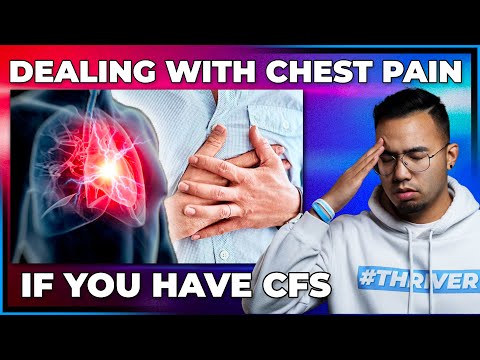
Watch: How to Deal With Chest Pain If You Have CFS?
What Makes Chest Pain Worse
CFS chest pain fluctuates. Some days it's barely noticeable. Other days it's so intense you're ready to call an ambulance. Understanding what feeds the pain helps you make sense of the pattern.
Fear and catastrophic thinking. This is the biggest amplifier. When the pain hits, the first thought is usually "something is wrong with my heart." That thought activates the nervous system, which increases the pain, which increases the fear. As Miguel puts it: "Everybody has a plan until they get punched in the face." When the pain strikes, logic goes out the window.
Monitoring and checking. Wearing a Fitbit and constantly checking your heart rate feeds the loop. Every spike in heart rate creates more anxiety, which creates more symptoms. The monitoring becomes its own trigger.
Googling symptoms. Searching "chest pain left arm tingling" will give you cardiac results that spike your anxiety further. This was a pattern Miguel fell into repeatedly during his worst period.
Physical exertion beyond your current threshold. Walking upstairs, leaving the house, or any activity that pushes past your current capacity can trigger the pain. The brain interprets the exertion as danger and uses pain to slow you down.
Stress and emotional overload. General life stress, worry about recovery, and frustration about limitations all fill the stress bucket and make the nervous system more reactive.
What Actually Helps Chest Pain
You can't fix chest pain by focusing on the chest. The pain isn't coming from there. It's being generated by the brain and nervous system. So the solution is addressing the underlying nervous system dysregulation, not chasing the individual symptom.
That's the approach CFS Recovery takes. Instead of treating 20 symptoms one at a time, you address the one root issue: the hypersensitive nervous system. When that calms down, the symptoms underneath it, chest pain included, start to resolve.
Rewiring the fear response is where real progress happens. Every time chest pain hits, there's a choice. You can panic, spiral into fear, and feed the loop. Or you can remind yourself: "It's just the nervous system." Those five words, repeated hundreds of times, start to build a new neural pathway. The brain begins to learn that the pain doesn't need to trigger a fear response.
This doesn't mean ignoring the pain or pretending it's not there. The pain is real. But the response to it determines whether it escalates or settles. As Miguel describes it: "Your success in recovery is determined by how well you respond to symptoms."
Nervous system retraining teaches the system that safety is the default, not threat. As the chronic stress response calms down, the brain stops generating the same level of pain. Research on neuroplasticity-based approaches supports that the brain can form new patterns when given consistent, calming inputs.
What our clients experience
We've got over 3,000 documented client wins across our community. Many of those specifically mention chest pain resolving. People who thought they were having heart attacks daily are now active, moving, and free from the chest pain cycle.
This isn't theory. It's documented. You can hear these stories directly from the people who lived them on our recovery stories page.
A real example: Joe's story
Joe dealt with severe chest pain after long COVID. Sharp, shooting pain was one of his most persistent symptoms. The acute illness left a lasting imprint on his nervous system, and his brain kept replaying the pain pattern even after the virus was gone. Through working with the CFS Recovery coaching team, he learned to recognize the pain as a nervous system signal, reach out for reassurance when needed, and gradually rewire his response. Over time, the chest pain episodes became less frequent and less intense. The pattern shifted because his nervous system learned it was safe.
Summary
Chest pain with CFS may be linked to nervous system dysregulation rather than heart damage. When the nervous system gets stuck in a chronic stress response, research suggests it can generate pain signals to keep you still. Up to 53% of ME/CFS patients experience chest pain. Fear and anxiety about the pain create a feedback loop that can make it worse. Always get your heart checked first. Once cardiac issues are ruled out, addressing the underlying nervous system pattern through retraining is what may help chest pain resolve.
Sources and References
- Naschitz JE, Rosner I, Rozenbaum M, et al. "Cardiovascular autonomic dysfunction in chronic fatigue syndrome." QJM: An International Journal of Medicine. 2008. PubMed 18504245
- Nijs J, Loggia ML, Polli A, et al. "Sleep disturbances, exercise intolerance and pain in ME/CFS: central sensitization." Pain Practice. 2017. PubMed 28557525
- Nelson MJ, Buckley JD, Thomson RL, et al. "Autonomic and cardiovascular function in chronic fatigue syndrome." Frontiers in Physiology. 2021. PubMed 33572498
- Mukhtar B, Mukhtar M. "Non-cardiac chest pain: role of the autonomic nervous system." Current Cardiology Reviews. 2019. PubMed 30175943
- Gulyaeva NV. "Neuroplasticity and recovery of function: molecular mechanisms and therapeutic approaches." Biochemistry (Moscow). 2022. PubMed 35164308
Frequently Asked Questions About Chest Pain and CFS
Yes. Chest pain is a common symptom of nervous system dysregulation in CFS. When the nervous system is stuck in a chronic stress response, it can create sharp, shooting, or pressure-like pain in the chest. If your cardiac tests have come back clear, this may be chronic pain processed in the brain rather than a sign of heart damage.
However, always get chest pain evaluated by a doctor first to rule out cardiac issues. That step is non-negotiable.
The only way to know for certain is to get properly tested. That means echocardiograms, Holter monitors, ECGs, and any other tests your doctor recommends. If all cardiac tests come back normal and doctors have ruled out heart problems, the chest pain is very likely a nervous system symptom.
CFS-related chest pain is chronic pain processed in the brain, not acute damage to the heart.
The nervous system creates real sensations. When your brain's pain processing centers become hypersensitive, they can generate sharp, shooting pain that genuinely mimics cardiac events. The pain is real. But it's being generated by an overactive nervous system, not by heart damage.
Your brain amplifies minor sensations and uses pain as a signal to keep you still and safe. It specifically targets chest pain because it knows that's what will stop you from moving.
CFS-related chest pain can improve significantly when the underlying nervous system dysregulation is addressed. It's not something you have to live with forever. Many people in the CFS Recovery community have reported chest pain resolving as their nervous system calmed down through retraining.
It takes consistent work. But the pattern can shift.
Absolutely. Anxiety and fear about chest pain create a feedback loop. The pain triggers worry. The worry activates the nervous system further. The heightened nervous system produces more pain. This cycle is why chest pain often gets worse the more you fear it.
Learning to respond calmly to the pain is a key part of breaking that loop.
First, always get medical clearance. If your heart has been checked and cleared, the chest pain during activity is likely your nervous system placing a limiter on your body. That doesn't mean you should push through aggressively.
It means gradual, supported expansion of activity, with awareness that the pain may be a nervous system signal rather than a sign of heart damage. CFS Recovery's coaching recovery system helps people navigate this carefully.
Chest Pain Can Resolve. Your Nervous System Can Calm Down.
Thousands of people in our community have experienced their chest pain easing as their nervous system settled. With coaching from people who've recovered themselves, you'll understand why it's happening and what to do about it.
Take the Free Self Assessment →