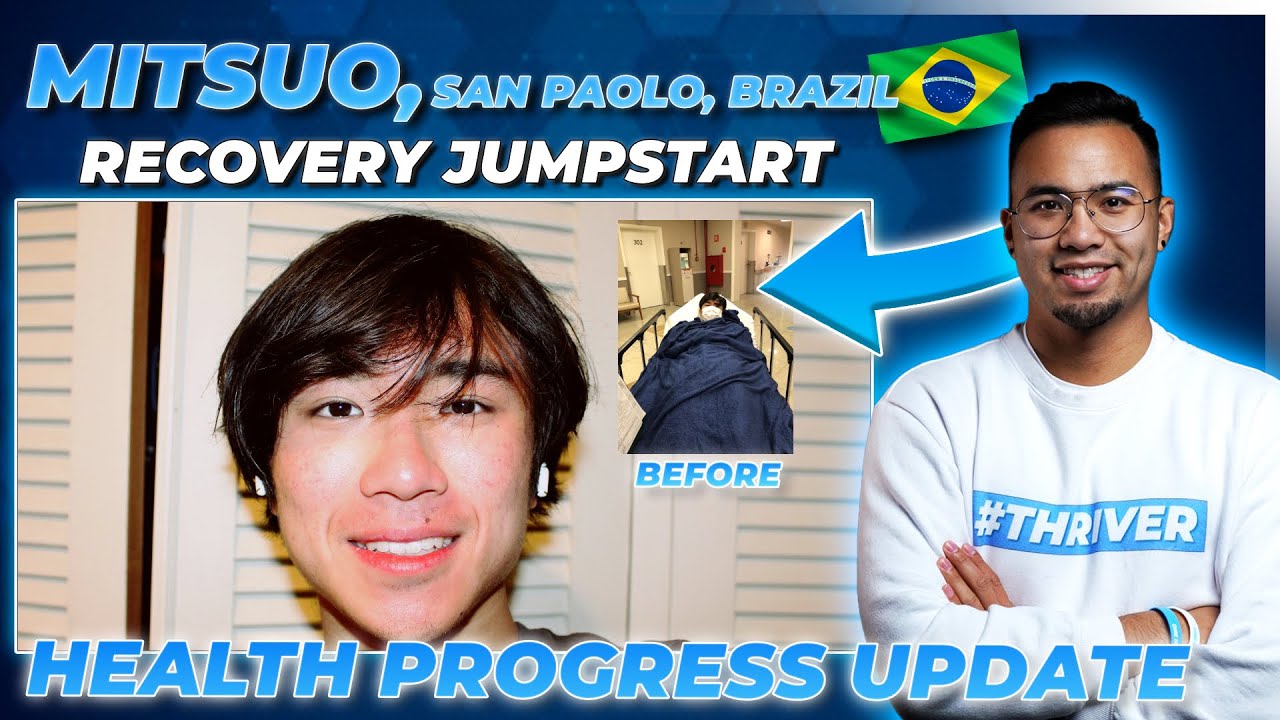
What Caused Mitsuo's Chronic Fatigue Syndrome?
Before getting sick, Mitsuo was a driven high school senior in Sao Paulo, Brazil. He was applying for college in the US while preparing for Brazil's notoriously difficult university entrance exams. His schedule was brutal: studying 10 to 14 hours per day, sleeping only 4 to 5 hours, exercising daily, and helping with housework. His body was running on fumes for months.
The surgical trigger
On May 18, 2021, Mitsuo had surgery to fix a deviated septum. After the procedure, doctors found a localized bacterial infection in his nose that required 28 days of antibiotics. That combination, the stress, the surgery, and the antibiotics, pushed his nervous system past its breaking point.
He was hospitalized for 16 days. He couldn't move. Sometimes he'd be paralyzed for an hour at a time. He needed a wheelchair to get to the bathroom. A 3-second walk from bed to toilet took him 10 minutes with help. Nurses checked on him constantly, taking blood pressure and heart rate each morning.
How Bad Did Mitsuo's Symptoms Get?
At his worst, Mitsuo was in bed 88 to 95% of the time. He couldn't sit up. He had panic attacks around the clock, so severe that he'd hit his head on the wall to stop the intrusive thoughts. He literally broke his wardrobe by punching it during a panic episode, something completely out of character for him.
The collapse at graduation
On his graduation day, Mitsuo was using a crutch just to stand. By the end of the ceremony, his body completely gave out. He collapsed, and his body wouldn't respond to him. His friend, who stands 197 centimeters tall, had to carry him to the car. This wasn't a one-time event. It happened multiple times.
Another time, he went skating and his body stopped working entirely. His friend had to carry him home, taking an Uber because Mitsuo couldn't move on his own. As he put it: "It's nice to be small and skinny because they can carry me." Even in the hardest moments, he found a way to smile.
The moment that changed everything
In February 2022, Mitsuo reached his lowest point. He could barely walk. The symptoms were constant. One day, he sat his parents down and thanked them for everything they'd done. Then he told them he couldn't do this anymore. He was done.
That moment became the turning point. Not because things suddenly got easier, but because Mitsuo made a decision: he would fight through this, not for himself, but for the people who loved him. He posted a video on his Instagram sharing his situation, and the messages of support from friends became fuel for his recovery on the hardest days.
How Many Doctors and Tests Did Mitsuo Go Through?
The medical journey Mitsuo went through was staggering. He saw around 40 different doctors. He had over 150 blood tests, with a single-day record of 33 blood tests at once. His family spent over 70,000 Brazilian reais on appointments, specialists, and specific exams.
No answers, just frustration
None of the tests found anything. Doctors suggested everything from Alzheimer's disease to multiple sclerosis. They ran MRIs looking for lesions on his brain and spine. When nothing showed up, many of them told him the same thing: it's all in your head. Depression. Anxiety. You're faking the symptoms.
This is something we see with so many of our clients. When tests come back normal but the symptoms are very real, it creates a confusing and isolating cycle. You start to question yourself: "Am I really going crazy? Because I swear I feel this stuff. I'm not making it up." The tests not detecting anything doesn't mean nothing's wrong. It means the nervous system dysregulation driving these symptoms doesn't show up on standard blood work.
How Did Mitsuo Find CFS Recovery?
After exhausting the medical route, Mitsuo gave up on doctor appointments entirely. He started his own research in February 2022, reading in German and English because there was almost no information about CFS available in Brazil. He made a list of every autoimmune and immune-related condition that could explain his symptoms.
Eventually, he found CFS and realized it matched what he was going through. But even with an answer, most doctors dismissed it. They'd say, "You're not feeling all the symptoms," or simply refuse to consider the diagnosis.
Why he chose this program
Mitsuo found CFS Recovery's YouTube channel and applied the next day. The specific video that clicked was about brain retraining for chronic pain, followed by another client's recovery interview. What made him choose this program over others was simple: access to a real person guiding him.
How Did Mitsuo Apply Brain Retraining?
Mitsuo didn't just do the brain retraining exercises. He did them relentlessly. When asked how many times per day he was applying the techniques, his answer was clear: about a thousand times. And he wasn't exaggerating.
With panic attacks happening around the clock and symptoms present 24/7, there was always something to retrain against. Every negative thought, every wave of fear, every worry, he'd acknowledge it and then practice being as indifferent as possible. He also did brain retraining specifically for chronic pain and practiced the techniques right before sleep.
The support system mattered just as much. When things got rough, he'd reach out to Miguel or to other members in the group. The coaching calls became his social lifeline. As he described it: "We are restricted socializing. This is our social event for now." The human contact, the community of people who understood, those things carried him through the hardest stretches.
How Quickly Did Mitsuo's Recovery Progress?
When Mitsuo started the program in April 2022, he could barely sit up. His first win in week one was being able to sit upright for 30 minutes and eat dinner with his family. That was it. That was the milestone.
Two months later, his life looked completely different.
Before vs. after: Mitsuo's recovery by the numbers
| Metric | Before Program | After 2 Months |
|---|---|---|
| Time in bed | 88-95% of the day | Up and moving regularly |
| Sitting tolerance | Unable to sit up | Full movie at the cinema |
| Physical activity | 10 min soccer = 3 hours on the floor | Up to 1 hour of soccer |
| Panic attacks | 24/7, hitting walls | Much easier to manage |
| Social activity | Isolated, couldn't see friends | Beach trips, group coaching calls |
| Outlook | Ready to give up | "Better days are coming for sure" |
The sunset at the beach
One of the most powerful moments came during a family beach trip. Mitsuo saw the sunset was about to end and he ran to catch it. He sat on the sand, watching the sky turn red, orange, and purple as stars appeared. He was feeling some symptoms, but he was there. He was alive. His legs were working.
The day before, he'd gone to a favela in Brazil and spent the whole day out. He did a lot of things he couldn't have imagined doing just weeks earlier. Yes, he entered an adjustment period afterward, but the fact that he could do it at all was a massive shift from where he started.
Back on the soccer field
Before the program, Mitsuo played 10 minutes of soccer and ended up on the floor for 3 hours, unable to stand. He punched and screamed at his legs, begging them to work. He thought it was his last time ever playing.
After two months in the program, he played for up to an hour. Not running the entire time, but chasing the ball, kicking, being part of the game. He had to leave a bit early and felt symptoms afterward, but the difference was night and day.
What Would Mitsuo Say to Someone on the Fence?
When asked what he'd say to someone afraid to try recovery, Mitsuo's answer was grounded and honest. He didn't promise it would be easy. He said the opposite.
He also shared what made this program worth it compared to the tens of thousands spent on doctors. After his family spent 70,000 reais on medical appointments with no results, Mitsuo described the coaching program as "really cheap" by comparison, because this one actually helped. "All this money that I spent, none of that stuff worked," he said.
Mitsuo's story is one of over 70+ documented recovery interviews from people across 20+ conditions who've gone through CFS Recovery's programs. His journey is still in progress, and that's part of what makes it so relatable. Recovery isn't always fast or linear. But progress is real, and it compounds.