Bedbound With Long COVID to Working 50 Hours a Week
"There's a kindness, both emotionally and physically, that I didn't possess before this program. And now that I've been through it, letting more gently and kindly with myself is something I'll do for the rest of my life."
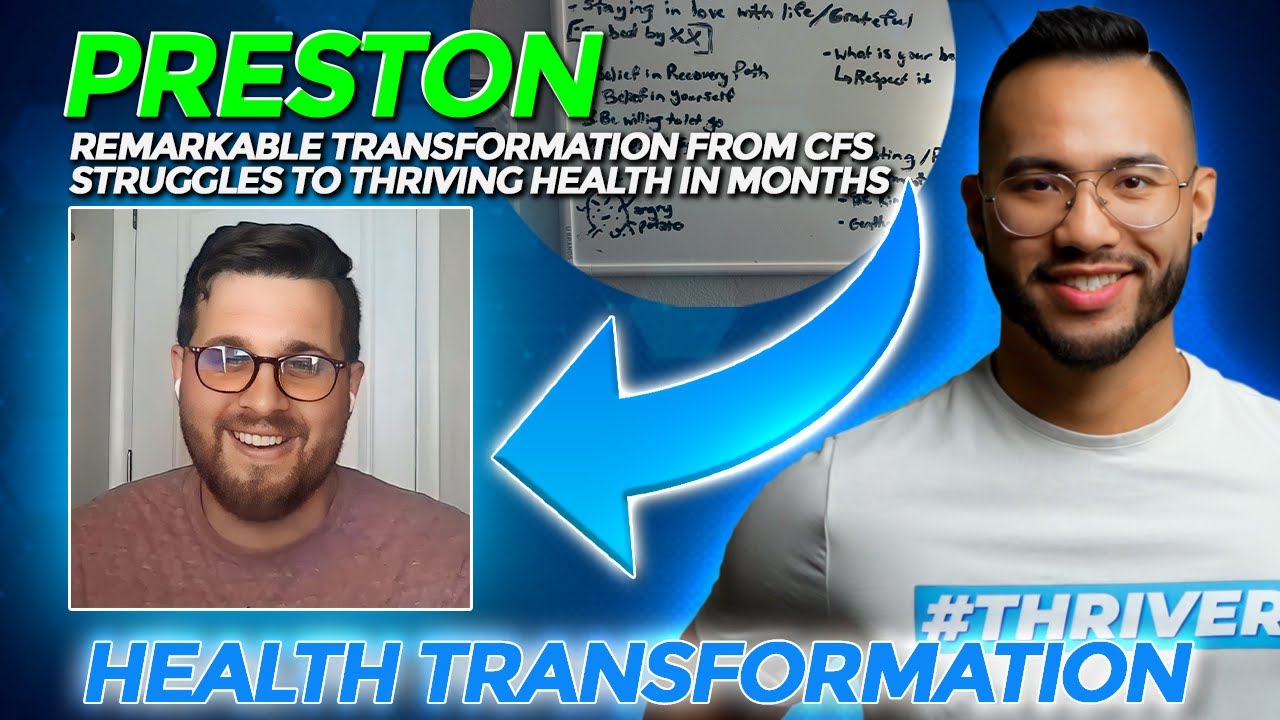
Watch Preston's full recovery interview
Key Takeaways From Preston's Recovery
| Condition: | Long COVID triggered by COVID-19 in December 2021. Became bedbound within weeks of taking a stressful job promotion. |
| Treatments that failed: | Chiropractor, functional medicine, acupuncture, endocrinologist, hyperbaric oxygen therapy, CBT, 15 supplements at once, bloodletting, fasting, low histamine diet. |
| What worked: | CFS Recovery's nervous system retraining program. Mindset shifts, responding well to symptoms, and community support. |
| Timeline: | Bedbound and unable to walk to the mailbox to working 40-50 hours a week and exercising in about 9 months. |
| Now: | Working full-time, exercising again, completed a 1.5-mile charity walk, helping others in the program recover. |
What Caused Preston's Long COVID and Chronic Fatigue?
Before getting sick, Preston was living what most people would call a high-performance life. He was running 8 to 10 miles a week, lifting weights several times a week, and working a demanding job that sometimes hit 60+ hours. He was 26 years old and felt invincible.
Then COVID hit him in December 2021. It wasn't gradual. Within a week, he couldn't walk to his mailbox. The fatigue was immediate and overwhelming. His cognitive function dropped fast. His family could see it.
The job promotion that pushed him over the edge
Even through all of that, Preston didn't think he had CFS yet. He was still dealing with COVID. So when a job promotion came along, he took it. He figured he'd just get better. He put his career in front of his health.
He paid for it. Within three weeks at the new job, his loved ones could see his eyes sunken into his head. The stress was overwhelming. He plummeted. Going to the bathroom became the day's entire journey.
What Symptoms Did Preston Experience?
Preston dealt with a long list of symptoms that came in waves. At their worst, they were completely disabling.
His symptoms included crippling fatigue, intense brain fog, cognitive deficits, memory problems, word-finding difficulty, POTS, anxiety, daily panic attacks, stomach pain, digestive issues, migraines, burning sensations around his eyes, high orbital pain, tinnitus, and frequent urination up to 12 times a day.
The fear spiral
The physical symptoms were bad enough. But the mental and emotional toll was even heavier. Everything became fear-based. Preston was afraid to flip over in bed because of what his heart rate might do. He was afraid to walk up and down stairs. Every moment was filtered through anxiety.
Preston describes it perfectly: the type-A, analytical personality that helped him solve problems in the past was now making everything worse. He couldn't stop trying to analyze his way out of this. But analyzing a nervous system condition just adds more fuel to the fire.
What Treatments Did Preston Try Before CFS Recovery?
Preston tried everything. Over the course of five months, he went through an exhausting list of treatments, doctors, and protocols. None of them worked.
His list included: chiropractor, functional medicine doctor, acupuncturist, endocrinologist, physical therapy, speech therapy, hyperbaric oxygen therapy, fasting, a low histamine diet, cognitive behavioral therapy, and he was on 15 different supplements at one time. He even tried bloodletting because his iron levels were "a smidge too high."
Doctors kept missing it
The medical system kept telling him the same thing. Anxiety medication. Depression medication. Good luck. Three months and you'll be fine.
Each new treatment brought a wave of hope, followed by crushing disappointment. Preston would pour himself into a method, cross his fingers, and then watch it fail. The doctors looked him in the eyes and genuinely believed they could help. They just weren't equipped. The medical system doesn't have the tools to address a dysregulated nervous system.
How Did Preston Find CFS Recovery?
Preston found a book called "How Your Body Can Heal Your Mind" and it opened a door. He started following the trail toward brain retraining. He found Dynamic Neural Retraining System (DNRS). And then he found one of Miguel's videos about brain retraining on YouTube.
After that, he couldn't stop watching. For two straight weeks, he binge-watched about 150 CFS Recovery videos. He'd put his headphones in and just listen.
Why CFS Recovery clicked for Preston
What drew Preston in was how Miguel communicated. The empathy. The fact that Miguel had been through it himself. Watching the recovery interviews, Preston could tell this wasn't a program trying to take his money. The team genuinely wanted to see people improve because they felt responsible to the community.
Preston talked to his girlfriend about it. "Am I crazy for doing this?" She said no. She said, "I think this is it." And it was.
What Made the Biggest Difference in Preston's Recovery?
Preston breaks recovery down simply: 85% mindset, 10% pacing, 5% adjusting to recovery. The mindset piece was the game changer.
The community and coaching calls
Being part of the cohort was a turning point. After feeling utterly alone for months, Preston suddenly had a group of people who understood exactly what he was going through. He made lifelong friends in the program.
The coaching calls were where everything came together. Preston would ask questions until he exhausted all of them. Then he reached a point where he could answer his own questions. Then he started answering other people's questions. He compares it to the principle behind support groups: you help yourself recover by helping others recover.
Responding well to symptoms
The golden rule in the program is responding well to symptoms. For Preston, brain fog was the biggest one. Once he learned to stop reacting with fear and started responding with calm acceptance, the brain fog began to lift. That's when things really took off.
Preston also built a wall of recovery reminders. He put his recovery principles on a whiteboard and surrounded himself with proof of progress and advice from the program. Half his wall was covered in it. Constant visual reminders of how far he'd come and what he needed to keep going.
What Were Preston's Early Recovery Wins?
The wins started small, and that's exactly the point. Recovery isn't one massive breakthrough. It's a conscious decision made every single day.
Sliding down the banister
One day, Preston slid down the stairs on his socks, riding the handrail like he used to. He got to the bottom and his dad looked at him like, "What the hell was that?" Preston realized: that person, the carefree version of himself, wasn't weighed down by all this anymore. He was just living his life.
Cooking without distraction
Before recovery, Preston couldn't do basic tasks without a podcast or music playing. He had to stay distracted from his own thoughts. When he noticed he could just cook, clean, or exist without needing constant distraction, he knew something had shifted.
The charity walk
One of his biggest early wins was a 1.5-mile charity walk for domestic violence awareness. He was anxious about it because it meant socializing and physical effort. But he did it. And nothing happened. No crash. No payback. He couldn't walk half a mile six months earlier. Now he was doing 1.5 miles and feeling fine.
How Did Preston Handle the Hard Days?
Preston is honest about this. There were plenty of times he didn't think he was going to get better. He even caught COVID again while in the program.
But what kept him going were the four recovery principles he wrote on his whiteboard: belief in recovery, belief in yourself, willingness to let go, and having a support system. He told himself that if he stuck to those principles, there was no way he could stay stuck.
The dark thoughts didn't come as one single moment. They came 9, 10, 11, 12 times throughout the day. Recovery meant making a conscious decision every single time to redirect those thoughts. In the beginning, it was hard. Over time, it became automatic.
Before vs. after: Preston's recovery by the numbers
| Metric | Before Program | After ~9 Months |
|---|---|---|
| Functional level | Bedbound | Fully functional |
| Work capacity | Unable to work | 40-50 hours per week |
| Exercise | Couldn't walk to mailbox | Running and lifting weights again |
| Supplements | 15 at one time | No longer needed |
| Walking ability | Bathroom was the day's journey | 1.5-mile charity walk, no pushback |
| Mental state | Daily panic attacks, constant fear | Calm, self-compassionate, helping others |
Where Is Preston Now?
Preston has pretty much got his life back. He's working 40 to 50 hours a week, exercising again, and living with a level of self-compassion he never had before getting sick.
He went from a guy who couldn't walk to his mailbox to someone who slides down banisters for fun, completes charity walks without a second thought, and helps other people in the program navigate their own recovery.
The biggest thing Preston gained wasn't just his physical health. It was a new relationship with himself. A kindness and gentleness that he says he'll carry for the rest of his life. His story is one of over 70+ documented recovery interviews from people across 20+ conditions who've gone through CFS Recovery's programs.